



Seyed Hashem Moosavi
Introduction
In the modern world, time management is often reduced to the art of “doing more in fewer minutes”, a linear, quantitative perspective that shackles the human spirit to the relentless ticking of the clock. In this view, time is a fleeting capital that can neither be recovered nor stored. Yet, a fundamental question remains: if every human being, from the prophets to the ordinary man, is granted the same twenty-four hours a day, why do the outcomes of our lives differ so profoundly? Why do some ignite a revolution of meaning within a short lifespan, while others drift through decades achieving little?
The answer provided by the Holy Qur’an defies the conventional mathematics of time. In the culture of Revelation, time is not merely a continuous numerical quantity; it is a vessel whose value is defined by its content.
Through the concept of “Barakah” (blessing), Islam teaches us that the worth of time lies not in its duration, but in its depth and impact. This quality-centric vision reaches its zenith in Laylat al-Qadr (The Night of Decree).
Laylat al-Qadr is far more than a religious observance or a simple unit of time; it is a “quantum gateway” in human history and a masterclass in time management within monotheistic logic. This night demonstrates how a finite window of time can transcend a thousand months of the calendar.
In essence, by introducing Laylat al-Qadr, the Qur’an replaces “quantity-based management” with a “quality-driven model.” It reveals that through a connection with the Ultimate Truth, one can traverse a thousand-month journey in a single night, effectively bridging the chasm between the ticking clock and the eternal Truth.
Time Management in the Horizon of Revelation: The Transition from Quantity to Quality
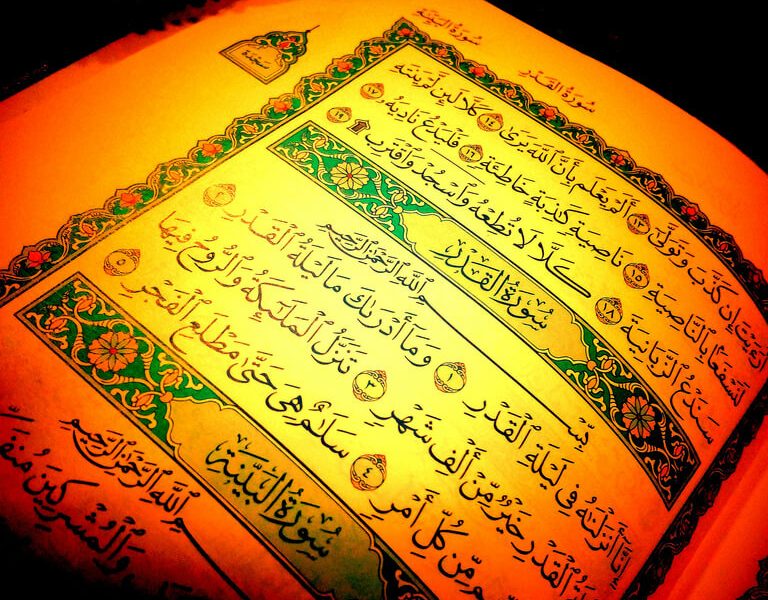
In the Chapter of Al-Qadr, God presents a profound statement that, if truly understood, fundamentally reshapes our perception of time: «لَیْلَةُ الْقَدْرِ خَیْرٌ مِنْ أَلْفِ شَهْرٍ؛“The Night of Decree is better than a thousand months.”
A thousand months equates to over eighty years, essentially a full human lifetime. This verse encapsulates one of the deepest Qur’anic concepts regarding time compression and strategic management: the value of time is not found in its duration or the volume of hours, but in its depth and resonance. Thus, the quality of a single night can outweigh the quantity of an entire lifetime.
This is precisely where the Qur’anic perspective on time management diverges from modern culture. In Divine logic, time is compressible. A single moment of “presence of heart” and conscious awakening can be more precious than decades lived in heedlessness. This vital point is echoed in the words of Imam Sadiq (as): « تَفَكُّرُ ساعَةٍ خَيرٌ مِن عِبادَةِ سَنَةٍ؛ “An hour of reflection is better than a year of [unthinking] worship.” (Bihar al-Anwar, Vol. 22. P. 327).
When a human enters the orbit of mindfulness, repentance, and sincere intention, their spiritual evolution becomes exponential rather than incremental. In those moments, their actions gain a multiplied value. Therefore, Laylat al-Qadr acts as a “Spiritual Accelerator,” propelling the righteous deeds of servants toward the heavens with immense velocity and power.
Imam Baqir (as) clarified this “acceleration” in response to his student, Humran ibn A’yan. When asked : «لَيلَةُ القَدْرِ خَيرٌ مِن ألفِ شَهْرٍ» أيُّ شيءٍ عَنى بِها ؟ what is meant by the Night being better than a thousand months, the Imam replied: ؟ « قالَ : العَمَلَ الصالِحَ فيها مِن الصلاةِ و الزكاةِ و أنواعِ الخَيرِ ، خَيرٌ مِن العَملِ في ألفِ شَهرٍ ليسَ فيها لَيلةُ القَدرِ؛ “Righteous deeds therein, such as prayer, charity, and all forms of goodness are superior to the same deeds performed over a thousand months that do not contain the Night of Decree.” (Thawāb al-Aʿmāl, Vol. 11. P. 92).
From the Qur’anic viewpoint, certain moments possess the capacity to become “Sacred,” meaning they gain the potential to anchor themselves in Eternity. The Holy Qur’an beautifully alludes to this truth: «مَا عِندَكُمْ يَنفَدُ، وَمَا عِندَ اللَّهِ بَاقٍ؛“Whatever is with you will perish, and whatever is with Allah will endure” (16:96). Time spent in forgetfulness simply passes and ends; but time tethered to the Divine is inscribed in the Ledger of Permanence.
Imam Ali (as) once remarked: «نَفَسُ الْمَرْءِ خُطَاهُ إِلَى أَجَلِهِ؛“A man’s breath is his stepping stone toward his death.” Yet, if these very breaths are infused with Divine intention, they are transformed into eternal capital. Laylat al-Qadr is the ultimate practice of this transformation, turning the fleeting into the everlasting.
The Secret of Time Compression and the Sanctification of Laylat al-Qadr
To understand why time becomes “compressed” and “sanctified” during this night, we must analyse the phenomenon through a metaphysical lens:
- The Instantaneous Revelation: The Bridge Between Earth and the Heavens
The exceptional value of this night stems from a cosmic event: the descent of the Absolute Divine Word. As the opening verse of Surah Al-Qadr declares: «إِنّا أَنْزَلْناهُ فِی لَیْلَةِ الْقَدْرِ؛ “Indeed, We sent it [the Qur’an] down on the Night of Decree.”
When Eternity (the Holy Qur’an) is poured into a specific vessel of time (Laylat al-Qadr), it eternalizes that duration, granting it a value far beyond ordinary chronological cycles. It transforms the night into a “Field of Divine Connection.” Consequently, a single moment of alignment with the Source of Existence during this night outweighs a lifetime spent in the shadows of heedlessness.
- The Dimension of “Barakah”: Time as a Blessed Vessel
In the third verse of Surah Ad-Dukhan, the Qur’an describes the superiority of this night over all others using the term “Mubarakah” (Blessed): « إِنَّا أَنزَلْنَاهُ فِي لَيْلَةٍ مُّبَارَكَةٍ؛“Indeed, We sent it down during a Blessed Night.”
In this context, “Blessing” signifies a metaphysical expansion. While the clock measures the horizontal passing of seconds, Barakah introduces a vertical dimension to time. It is this divine infusion that allows the finite hours of a single night to contain the spiritual weight and transformative power of eighty years. In the logic of Revelation, the “Blessed Night” is not just a date on a calendar; it is a rupture in the ordinary flow of time where the mundane meets the Infinite.
- The Convergence of Realms: The Descent of Angels and the Spirit
According to the divine report in Surah Al-Qadr, on this night, the Earth becomes the host to the sovereign agents of the Celestial Realm: «تَنَزَّلُ الْمَلَائِكَةُ وَالرُّوحُ فِيهَا بِإِذْنِ رَبِّهِم مِّن كُلِّ أَمْرٍ ؛ “The Angels and the Spirit descend therein by permission of their Lord for every matter.” (97:4). This universal assembly of angels minimizes the veil between the material world (Alam al-Mulk) and the unseen realm (Alam al-Malakut).
The presence of the “Spirit” (Ar-Ruh), the supreme entity above all angels alongside the angelic hosts, saturates the Earth’s atmosphere with a concentrated spiritual energy. In such an environment, the arduous journey of spiritual wayfaring, which typically takes a lifetime, becomes “exponential.” To put it eloquently, Laylat al-Qadr acts as the “Propulsion Engine” of the soul. It provides the spiritual thrust necessary to compensate for a year, or even a lifetime of stagnation and spiritual lag within a mere matter of hours.
- Strategic Management and the Engineering of Destiny
Laylat al-Qadr is the night of annual trajectory-setting, the night of macro-level Divine decrees regarding sustenance, lifespan, success, and the fundamental path of a human life. In the logic of management, the value of “planning time” invariably outweighs “execution time.”
Just as in the corporate world, a few hours of a high-level board meeting can determine the fate, profits, and losses of a global enterprise for an entire fiscal year, Laylat al-Qadr serves as the “Cosmic Think Tank” for human destiny.
The fourth verse of Surah Ad-Dukhan emphasizes this definitive process: «فِیهَا یُفْرَقُ کُلُّ أَمْرٍ حَکِیمٍ،» “Therein [on that night] is distinctively ordained every matter of wisdom.” (44:4). Therefore, managerial intelligence dictates that an individual must apply maximum focus to this “inflection point.”
By aligning one’s will with the Divine decree during these critical hours, a person is not merely “spending time” but is engineering their future. It is the ultimate exercise in high-leverage living: dedicating a single night to secure the prosperity of a lifetime.
- Peace and Spiritual Security Until the Dawn
From a management perspective, security is the primary prerequisite for productivity. As the Almighty declares in the final verse of Surah Al-Qadr: «سَلامٌ هِیَ حَتّى مَطْلَعِ الْفَجْر» “Peace it is until the emergence of dawn.”
In this context, “Peace” (Salam) signifies immunity from spiritual afflictions, the whispers of the ego, and the interference of Satan. It is a night of Spiritual Quarantine. God has designed an atmosphere where “demonic noise” is minimized, allowing the human soul to engage in absolute reconciliation with itself and its Creator. This state of sanctuary remains fluid until the first light of day, offering a peerless opportunity for Tawbah, which can be understood as a “Return to Factory Settings” for the human spirit.
The Angelic Salutation: A Catalyst for Joy
Narrations tell us that on this night, angels pass by every believer engaged in worship and offer them their “Salutations.” This angelic greeting ignites a light within the heart that doubles the fervour for devotion.
Consider the story of Prophet Abraham (as), to whom a few angels appeared to bring tidings of a son, greeting him with “Salam” (Surah Hud: 69). It is said that the joy Abraham experienced from that divine greeting outweighed all the treasures of the world. Now, imagine the profound grace and blessing when legions upon legions of angels descend on Laylat al-Qadr specifically to greet the believers.
Furthermore, when Abraham (as) was cast into Nimrod’s fire, the angels descended with their salutations, and the inferno was transformed into a blooming garden (“Coolness and Peace”). If the greeting of a few angels could turn a physical fire into a garden, will not the collective salutations of the heavenly hosts on Laylat al-Qadr turn the fires of the hereafter into “Coolness and Peace” for the faithful?
- Just Mercy: Eliminating Time’s Deadlock
If spiritual growth were strictly dependent on quantity, such as having a long life, Divine Justice might be questioned regarding those whose lives are cut short. However, Laylat al-Qadr is the ultimate manifestation of Just Mercy. If profound spiritual evolution required decades of uninterrupted worship, many, especially those with shorter lifespans, harsher circumstances, or fewer opportunities would be left behind in a perpetual state of spiritual lag.
By introducing Laylat al-Qadr, the Qur’an establishes a Law of Grace: the path to compensation and acceleration is open to everyone, regardless of when they start. This divine law allows every generation and every individual, even those who feel they have squandered the best years of their lives to perform a “Quantum Leap” and join the ranks of the spiritual pioneers. On this night, there is no such thing as “arriving too late,” for a hundred-year journey can be completed in a single night.
The Prophet Muhammad (peace be upon him and his family) affirmed this reality, stating: «مَن أحیا لیلة القدر غُفِرَ له ما تقدّم من ذنبه؛ “Whoever keeps the vigil of Laylat al-Qadr [in worship], their past sins shall be forgiven.” This is the essence of divine efficiency: the purification of a lifetime in the span of a single night.
- Disconnecting to Reconnect: The Prerequisite for Temporal Blessing
The rituals of Laylat al-Qadr, seclusion, silence, placing the Qur’an upon one’s head, and intense supplication are far more than mere acts of worship; they are a rigorous discipline of focus.
In an era of information overload, where constant “notifications” fragment our attention, Laylat al-Qadr is an exercise in reclaiming the mind. By disconnecting from the creation (Khalq) and tethering the soul to the Creator (Haqq), a human’s spiritual processing power reaches its zenith. Here, we realize that time anchored in God is “enduring” (Baqi), while time drowned in materialism is “perishing” (Fani): «مَا عِندَكُمْ يَنفَدُ وَمَا عِندَ اللَّهِ بَاقٍ» “Whatever is with you will perish, and whatever is with Allah will endure.” (16:96).
Conclusion: The Heartbeat of Time
Laylat al-Qadr teaches us that humanity is not a prisoner to the mathematics of the calendar. If we position ourselves in the right state (repentance and spiritual urgency) at the right moment (the Night of Decree), our impact on the universe is magnified by a “thousand-fold factor.” This is the essence of managing life’s “peak moments.”
Laylat al-Qadr is the heart of time; by synchronizing the rhythm of this heart, one can bring health and vitality to the entire body of their life. This “compression of time” is a manifestation of Divine Mercy, designed to compensate for our biological and temporal limitations. As Imam Baqir (as) beautifully noted regarding the multiplication of deeds on this night: « و لو لا ما يُضاعِفُ اللّه ُ لِلمؤمنينَ ما بَلَغوا و لكنَّ اللّه َ عَزَّ و جلَّ يُضاعِفُ لَهُمُ الحَسَناتِ Were it not for God multiplying the rewards for the believers, they would never reach [perfection]; but Allah, the Mighty and Sublime, multiplies their good deeds for them.” (Thawāb al-Aʿmāl, Vol. 2. P. 67).
Final Thought
Ultimately, Laylat al-Qadr invites us not to measure life by the number of years, but by the depth of moments. Perhaps the secret of the world’s most transformative souls is that they learned the art of turning ordinary moments into their own personal “Nights of Decree.”