


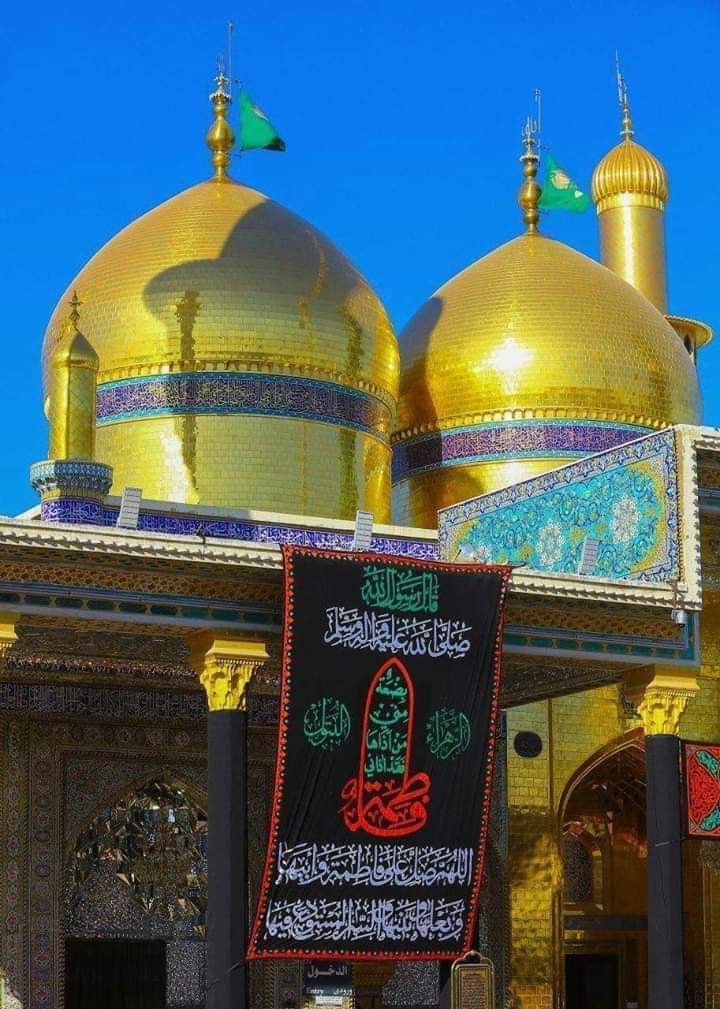


The Role of the Children of Imam Musa al-Kadhim (peace be upon him) in Shaping Shi‘i Civilisation in Iran
Seyed Hashem Moosavi
Introduction
History is sometimes written with the sword, and sometimes with migration. Among the many transformative movements in Islamic history, the migrations of the descendants of the Ahl al-Bayt (peace be upon them), especially the children of Imam Musa al-Kadhim (peace be upon him), stand out as events that, despite lacking outward political power, profoundly reshaped the intellectual and spiritual landscape of an entire land.
Contemporary Iran, as one of the most significant centres of Shi‘ism in the world, owes much of its identity to these quiet yet far-reaching migrations, journeys that not only moved people across geography, but also forged a distinct religious identity and embedded the authentic Alid culture deep within the fabric of society.
This week, as we enter the blessed days of Dahe-ye Karāmat (the Ten Days of Nobility), a period that commemorates the radiant rise of Imamate and Wilayah, we turn our attention to this pivotal chapter of history. These days, associated with the auspicious births of the shining stars of the Ahl al-Bayt, among them Lady Fatimah al-Ma‘sūmah (peace be upon her), Ahmad ibn Musa Shahcheragh (peace be upon him), and Salih ibn Musa al-Kadhim (peace be upon him), offer a fitting opportunity to revisit their enduring role in the spread of Shi‘i culture.
In what follows, we will explore how the presence of these noble descendants of the Prophet Muhammad (peace and blessings be upon him and his family) across various regions of Iran, from Qom to Shiraz and beyond, not only led to the establishment of sacred shrines and spiritual centres, but also planted the seeds of love for the Ahl al-Bayt in the hearts of the Iranian people, laying the foundations of a civilization that continues to stand firm to this day.
- Historical Context: Why Migration?
The era of the Abbasid Caliphate, particularly after the martyrdom of Imam Musa al-Kadhim (peace be upon him) was marked by intense pressure on the Alawites. The Abbasid rulers, who perceived the spiritual authority of the Ahl al-Bayt as a serious threat to their own legitimacy, adopted a dual policy: on the one hand, repression and imprisonment; and on the other, surveillance, control, and forced displacement.
In such a climate, the children of Imam al-Kadhim (peace be upon him) were compelled to leave Medina. Yet this “compulsion” gradually transformed into a historic opportunity, an opportunity to transmit the teachings of the Ahl al-Bayt to lands that were ready to receive them.
To better understand the significance of this migration, it can be examined through three key dimensions, revealing that these movements were not merely a “flight,” but rather a subtle and strategic endeavour:
1) Decentralizing Abbasid Power (A Network Strategy)
The migration of the children of Imam al-Kadhim (peace be upon him) to Iran effectively created a vast and dynamic network. While the centre of the caliphate (Baghdad) remained under strict control, the presence of the Prophet’s descendants in distant cities such as Qom, Rayy, Shiraz, and Khurasan established safe spiritual bases. These figures became focal points for the dissemination of the teachings of the Ahl al-Bayt, gradually shifting religious authority beyond the direct reach of the ruling power.
2) The Union of Lineage and Knowledge (Scholarly Authority)
These noble figures were not revered merely because of their lineage; each was also a bearer of the intellectual and moral legacy of Imam al-Kadhim (peace be upon him). Their migration was, in essence, the transfer of “living libraries.” When Lady Fatimah al-Ma‘sūmah (peace be upon her) arrived in Qom, or Ahmad ibn Musa (peace be upon him) settled in Shiraz, people benefited not only from their presence but also from their character, teachings, and lived example. This form of face-to-face transmission deepened the faith of the people far beyond what any formal or state-sponsored preaching could achieve.
3) Establishing Cultural Security through Sacred Geography
Perhaps one of the most profound outcomes of these migrations was the sacralization of Iran’s geography. The presence of the blessed resting places of these noble figures transformed cities into sanctuaries and spiritual strongholds. Over the centuries, these shrines became meeting points of hearts and sources of intellectual and spiritual unity for Shi‘a communities. In effect, these migrations elevated Iran from a mere geographical space into a Shi‘i civilizational landscape, a land defined not only by territory, but by sacred meaning and enduring devotion.
- The wave of Migration: From Medina to the Heart of Iran
These migrations were, in reality, a strategy of dispersing light. The movement of the children of Imam Musa al-Kadhim (peace be upon him) was not a scattered or merely individual phenomenon; rather, it evolved into a purposeful and far-reaching movement, a flow that gradually reshaped the religious map of a civilization.
By settling in regions across Iran, such as Qom, Rayy, Shiraz, Khurasan, Tabaristan, and Gilan, the Alawites not only distanced themselves from the direct reach of the Abbasid dominance in the capital but also transformed their places of residence into centres of knowledge and spirituality. In doing so, they turned Iran into a safe refuge for Shi‘i thought and planted the seeds of an identity that, decades later, would elevate Iran into a central hub of the Shi‘i world.
Among these luminous figures, the presence of personalities such as Lady Fatimah al-Ma‘sūmah and Ahmad ibn Musa (peace be upon them) played a decisive role in consolidating Shi‘i identity in Iran:
Lady Fatimah al-Ma‘sūmah (peace be upon her): Qom as a Centre of Scholarly Authority
The migration of Lady Fatimah al-Ma‘sūmah (peace be upon her) to Qom was not merely a devotional journey, it was a civilizational event.
- Transformation of Qom’s Role: Prior to her arrival, Qom was known as a Shi‘i city; however, with her presence and blessed shrine, it was transformed into a spiritual capital and a centre for the production of Shi‘i thought.
- A Magnet for Scholars: Her presence drew hadith scholars, jurists, and transmitters of knowledge from across the Muslim world. Qom, blessed by her, became one of the safest environments for the expansion of the teachings of the Ahl al-Bayt under Abbasid pressure. Indeed, if Qom is today recognized as the foremost centre of Shi‘i scholarship in the world, the seeds of that legacy were sown through the conscious and purposeful migration of this noble lady.
Ahmad ibn Musa (Shah Cheragh) (peace be upon him): Shiraz as a Sanctuary of Resilience and Resistance
The migration of Ahmad ibn Musa (peace be upon him) to Shiraz carried significant social and political dimensions.
- Charismatic Leadership: He was not only revered due to his lineage, but also for his outstanding character and deep piety. His arrival in Shiraz effectively meant transferring the spirit of leadership into one of the most strategically important regions of Iran (Fars).
- Consolidating Identity in the South: At the time, Shiraz was a crossroads of diverse cultures and intellectual currents. The presence of Shah Cheragh (peace be upon him) transformed it into a stronghold for the Alawites. This presence created a form of spiritual security for the followers of the Ahl al-Bayt, shaping Shiraz into a city known for its love toward them for centuries to come.
These two centres, Qom and Shiraz were not only points of brilliance; rather, they were integral parts of a vast network of identity. Alongside these shining stars, the presence of figures such as Salih ibn Musa al-Kadhim (peace be upon him) and many other descendants of the Imams across different regions of Iran established a vast network of spiritual bases.
This purposeful dispersion ensured that Shi‘ism in Iran did not remain a minority expression, but rather grew into a deeply rooted, widespread, and civilization-building movement, one that, in later centuries, provided the essential groundwork for the emergence of governments and societies committed to the teachings of the Ahl al-Bayt (peace be upon them).
- The Imamzadehs: A Grassroots Network for Preserving Identity
One of the most significant outcomes of the migration of the children of Imam Musa al-Kadhim (peace be upon him) was the emergence of a civilizational phenomenon across the Iranian plateau known as the Imamzadehs (shrines of the descendants of the Imams). Contrary to the common perception that these sites are merely “tombs,” they are better understood as spiritual hubs or networked centres that, in the absence of formal Shi‘i institutions, carried the vital responsibility of preserving the religious identity of society.
This grassroots network fulfilled multiple layered functions, each playing a crucial role in sustaining the intellectual and spiritual life of Shi‘ism in Iran:
- A Point of Emotional Connection (Affective Capital):
The Imamzadehs became fields of love, spaces where love for the Ahl al-Bayt was cultivated and renewed. In a society that might not always engage deeply with complex theological discourse, these sacred sites fostered a heartfelt bond through pilgrimage and devotion. This love became the enduring thread that preserved Shi‘i continuity during the most challenging periods of history.
- Public Universities of the People (Educational Function):
Each shrine functioned as a university without walls. Around these sacred spaces, people learned not only the rulings of religion, but also Akhlaq, the lived example of the Ahl al-Bayt, and the principles of justice and moral responsibility. These centres often served as alternatives to state-controlled mosques, which were at times used by ruling powers to promote official ideologies.
- Centers of Social Cohesion and Identity (Civic Function):
The Imamzadehs evolved into meeting grounds for communities. In times when geographical dispersion hindered unity, these sites provided spaces for gathering, resolving disputes, supporting the vulnerable, and making collective decisions. In effect, each shrine nurtured a micro-community shaped around Alid values.
- Independence from Political Authority:
Perhaps the most defining feature of this network was its popular and organic nature. It was not established by governmental decree, but through the sincere devotion of local people themselves. This grassroots foundation made the network resilient against political pressure and attempts at ideological suppression, as its roots lay in the hearts of the people rather than in the courts of rulers.
In this sense, the Imamzadehs can be seen as the pillars of the tent of Shi‘ism in Iran, a distributed yet intelligent network that stretched from Qom to Shiraz, and from Rayy to Khurasan. Through this network, Iran was gradually transformed from a land of diverse religious expressions into a firm stronghold of the school of the Ahl al-Bayt (peace be upon them).
- “Pulpitless Preaching”: The Method of Influence of the Sadat and Imamzadehs
The children of Imam Musa al-Kadhim (peace be upon him) migrated to Iran during a time when political oppression had stripped them of any official platform or public pulpit. Yet history proved that light cannot be confined. With a divinely inspired wisdom, they established a new and remarkably effective model of religious outreach, what may be called “lived preaching” or “pulpitless preaching.”
This approach rested on several foundational pillars, each of which planted the seeds of faith deep within the fabric of society:
- Embodied Ethics (Practical Preaching):
They lived among the people, present in marketplaces, in fields, and in addressing everyday needs. Religion was not encountered in distant texts, but in their open countenance, integrity, justice, and forgiveness. This was a form of invitation that naturally attracted hearts without coercion.
- Emotional Bond and Shared Humanity:
By standing alongside ordinary people and sharing in their hardships, the Sadat dissolved the distances between religious authority and the community. This closeness broke barriers of mistrust and transformed people from passive adherents of an abstract belief into devoted defenders of the ideals of the Ahl al-Bayt.
- Inspiring Steadfastness:
Their patience in the face of exile, separation from homeland, and political pressure became a living lesson in resilience. This silent strategy of endurance left such a deep imprint that their memory became a symbol of resistance against oppression.
This method of preaching was, in many ways, more penetrating than any formal sermon, for words only reach the heart when they have first taken root in the soul of the speaker. The children of Imam al-Kazim (peace be upon him) preached their father’s legacy through their very lives.
- Lessons for Today: From History to Responsibility
This luminous chapter of history is not merely a story of the past; it is a roadmap for our present, especially in an age where preserving cultural and religious identity is of vital importance. The legacy of these noble figures offers enduring lessons for our time:
- Migration as a Civilizational Act:
Migration is not merely a change of place; it is the transferring of values. Wherever a person of vision and purpose settles, that place can become a centre of transformation. This teaches us today that influence is not confined to major centres; every corner can become a cultural axis.
- The Primacy of Conduct over Speech:
In a world saturated with media messages, the most effective form of outreach remains lived example. Our actions speak more powerfully than our words in conveying the truths we believe in.
- The Power of Grassroots Networks:
The endurance of Shi‘ism in Iran was sustained by a self-generated, people-cantered network built around the Imamzadehs. Today as well, the revival of authentic culture depends on nurturing deep, community-based connections, not merely relying on formal institutions.
- Emotional Capital: The Pulse of Faith:
Love for the Ahl al-Bayt has been the enduring force that preserved faith through centuries of intellectual and social challenges. This love is the beating heart of the culture, one that must be sustained through deep understanding and heartfelt connection, so that it may be passed on to future generations.
Conclusion: A Legacy Flowing Through the Soul of Iran
The migration of the children of Imam Musa al-Kadhim (peace be upon him) to Iran was not merely one historical event among many; it marked a decisive turning point in the formation of Iranian identity. What appeared outwardly as an escape from the pressures of the Abbasid caliphate was, in its deeper reality, a Light emission and the foundation of a Shi‘i civilization.
These noble Imamzadehs, armed with the twin forces of lived ethics and grassroots network-building, transformed Iran into a safe haven for the school of the Ahl al-Bayt (peace be upon them). They demonstrated that the propagation of truth does not depend on official platforms or political power; rather, it is embodied character and emotional connection that serve as the most powerful means of influence.
Today, the sacred shrines of these pure descendants are not merely historical monuments; they are vibrant centres of faith, unity, and identity. Their legacy is a living movement, one that began in the past and now extends into our present responsibility: to preserve this love and to embody the same ethics that transformed Iran into a land devoted to the Ahl al-Bayt.
We are the heirs of these migrations, migrations that reshaped the geography of our thought, guiding it from darkness into the illuminating path of Wilayah.