




A Reflection on the “Jurisprudence of Testimony” in Ziyarat Arbaeen
Seyed Hashem Moosavi
Introduction
Arbaeen is often known through the virtue of visitation, the story of the first pilgrim, and the grandeur of its walk. Yet within the text of Ziyarat Arbaeen there are signs that open another horizon: the striking repetition of the word “Ashhadu”- “I bear witness.”
The pilgrim standing before Imam Husayn (peace be upon him) does not merely offer greetings, nor does he speak only of his grief. Again and again, he bears witness: «أَشْهَدُ أَنَّكَ أَمِينُ اللهِ وَابْنُ أَمِينِهِ» – “I bear witness that you are the trustee of Allah and the son of His trustee”; «وَأَشْهَدُ أَنَّ اللّٰهَ مُنْجِزٌ مَا وَعَدَكَ» – “and I bear witness that Allah will fulfil what He promised you”; «وَأَشْهَدُ أَنَّكَ وَفَيْتَ بِعَهْدِ اللهِ» – “and I bear witness that you fulfilled the covenant of Allah.” Finally, he calls Allah to witness that he is a friend to those who befriend Husayn and an enemy to those who oppose him. What is the purpose of all this testimony? Had the truth of Ashura not already been made manifest through the blood of the Imam and his companions?
The answer must be sought in the distance between the occurrence of truth and the endurance of truth. Ashura revealed the truth, but Arbaeen asks the Ummah not to allow that truth to be hidden, distorted, or rendered ineffective. The Imam became a martyr on Ashura; now the Ummah must become a witness. By the “jurisprudence of testimony” in this article, I do not mean the technical chapter of legal testimony in jurisprudence, but rather the set of intellectual, moral, and social responsibilities borne by a people who have come to know the truth and no longer have the right to remain indifferent in the face of its distortion.
The Imam’s Martyrdom Was Not the End of Responsibility
No truth endures merely because it has occurred in history. Events may be denied, and victorious powers may rewrite their moral defeat as political triumph. Therefore, the martyrdom of Imam Husayn (peace be upon him) needed witnesses who would say who was killed, why he was killed, and by what current he was killed.
The Noble Qur’an does not regard concealing testimony as harmless silence. It says: «وَلَا تَكْتُمُوا الشَّهَادَةَ وَمَنْ يَكْتُمْهَا فَإِنَّهُ آثِمٌ قَلْبُهُ» – “Do not conceal testimony; whoever conceals it, his heart is sinful” (Surah al-Baqarah, 2:283). On this basis, one who knows the truth but fails to speak it at the moment of need has not merely fallen short of a virtue; he has helped falsehood to continue.
If we regard Ashura as the summit of the Imam’s fulfilment of duty, then Arbaeen must be seen as the beginning of a new stage in the responsibility of the Ummah: the blood of the Imam brought the truth out from beneath the rubble of distortion, and the testimony of the Ummah must preserve it in the memory of history.
Karbala and the Battle That Began After the War Ended
The army of Umar ibn Sa‘d considered the military battle finished on the afternoon of Ashura. Yet the conduct of the Umayyad government shows that it did not regard victory on the battlefield as secure without victory over the narrative. It therefore tried to portray Imam Husayn (peace be upon him), not as the grandson of the Prophet and a reformer of the Ummah, but as a rebel who had risen against the ruler of the Muslims.
A clear example appears in the words of Ubaydullah ibn Ziyad. After the captives entered Kufa, he presented himself as the representative of “truth” and, God forbid, called Imam Husayn (peace be upon him) “a liar and the son of a liar.” Lady Zaynab (peace be upon her) shattered this narrative and said: «إِنَّمَا يُفْتَضَحُ الْفَاسِقُ وَيَكْذِبُ الْفَاجِرُ وَهُوَ غَيْرُنَا» – “It is the corrupt person who is disgraced, and the wicked person who lies-and he is other than us.”
Ibn Ziyad made great efforts to attribute the killing of Imam Husayn (peace be upon him) and his companions to the “direct will of God,” so that he could remove responsibility for the crime from himself. When he saw Imam al-Sajjad (peace be upon him) among the captives and recognized him, he shouted, “Did God not kill Ali ibn al-Husayn in Karbala?” At that moment Imam al-Sajjad (peace be upon him) courageously replied: «كانَ لي أَخٌ يُسَمّى عَلِيّاً قَتَلَهُ النّاسُ» – “I had a brother named Ali whom the people killed.” When Ibn Ziyad said, “Rather, God killed him,” Imam al-Sajjad recited the verse: «اللَّهُ يَتَوَفَّى الْأَنْفُسَ حِينَ مَوْتِهَا» – “Allah takes the souls at the time of their death” (Surah al-Zumar, 39:42). Through this verse, the Imam showed that the taking of the soul belongs to God, but murder and crime are the deliberate acts of guilty human beings.
This brief answer exposed another instrument of distortion: hiding human responsibility behind the title of divine decree. The caravan of captives did not allow the regime to present its political crime as God’s destiny. These exchanges have been reported in the works of Shaykh al-Mufid, al-Tabari, and other sources.
Captives Who Became the First Witnesses
From Karbala to Kufa and Damascus, the Ahl al-Bayt (peace be upon them) appeared outwardly as captives, but in reality, they became the first official witnesses of Ashura. They brought into society what the regime wished to conceal: the Imam’s relationship to the Prophet, the aims of his uprising, the betrayal of the Kufans, the nature of Yazid’s rule, and the oppression suffered by the martyrs.
In the royal court in Damascus, Yazid struck the blessed teeth of Imam Husayn (peace be upon him) with a cane and recited verses expressing revenge for his pagan forefathers killed at Badr. At that moment Lady Zaynab (peace be upon her) rose and delivered a storm-like sermon, saying: «أَظَنَنْتَ يا يَزِيدُ حَيْثُ أَخَذْتَ عَلَيْنَا أَقْطَارَ الْأَرْضِ… أَنَّ بِنَا عَلَى اللَّهِ هَوَاناً وَبِكَ عَلَيْهِ كَرَامَةً؟» – “O Yazid, do you imagine that because you have closed the horizons of the earth upon us… this is a sign of our humiliation before Allah and your honour in His sight?” Then, with a historic sentence, she announced the future of this battle in advance: «فَكِدْ كَيْدَكَ… فَوَاللهِ لَا تَمْحُو ذِكْرَنَا» – “Plot whatever plot you can… By Allah, you will never erase our remembrance.”
Imam al-Sajjad (peace be upon him), too, in the mosque of Damascus, introduced himself repeatedly: «أَنَا ابْنُ مَكَّةَ وَمِنَى، أَنَا ابْنُ زَمْزَمَ وَالصَّفَا… أَنَا ابْنُ مُحَمَّدٍ الْمُصْطَفَى، أَنَا ابْنُ فَاطِمَةَ الزَّهْرَاءِ…» – “I am the son of Mecca and Mina; I am the son of Zamzam and Safa… I am the son of Muhammad al-Mustafa; I am the son of Fatimah al-Zahra…” In this way he made clear to people who, under Umayyad propaganda, did not properly know the family of the Prophet that the captives were not strangers to Islam, but the children of Islam’s founder.
Thus, the second stage of the Husayni movement did not continue with the sword; it continued through testimony. Sermon, tears, narration, and visitation became the instruments of this new struggle. If bodies were besieged on Ashura, meaning was besieged after Ashura. Had the Ahl al-Bayt (peace be upon them) not liberated the meaning of Ashura from the propaganda siege of the Umayyads, Karbala might today have been recorded not as a divine and reformist movement, but in the official history of that time as a failed internal rebellion.
Arbaeen: Turning an Event into the Memory of the Ummah
A historical event, no matter how grave, heroic, or tragic, will gradually become confined within the boundaries of the past if abandoned to the passage of time; it turns into a page in history books useful only to historians. But when a community consciously and regularly returns to that point, the event leaves the calendar and becomes part of public identity and collective memory.
Arbaeen undertakes precisely this vital role. It does not allow the great event of Ashura to remain merely a painful report from Muharram of the year 61 AH. Every year, Arbaeen removes this historical file from the archive, opens it again, summons witnesses to testify, and asks new generations in a clear voice: “What is your position today toward truth and the oppressor?”
A person may privately love Imam Husayn (peace be upon him) in the corner of his home and shed tears over his oppression; this is a beautiful tradition, but it is not enough to stand against unjust structures. A public and organized distortion is never corrected by hidden and individual affection.
The crime of Karbala was not a simple assault or an incident in darkness; it was an open crime, supported by the media power of the government and accompanied by widespread propaganda designed to present truth as falsehood and falsehood as truth. Therefore, protecting the truth that was suffocated in Karbala cannot be private; it must be visible, transnational, and social.
From this perspective, Arbaeen is not merely a measure of numbers or a count of pilgrims; it is the great assembly of witnesses.
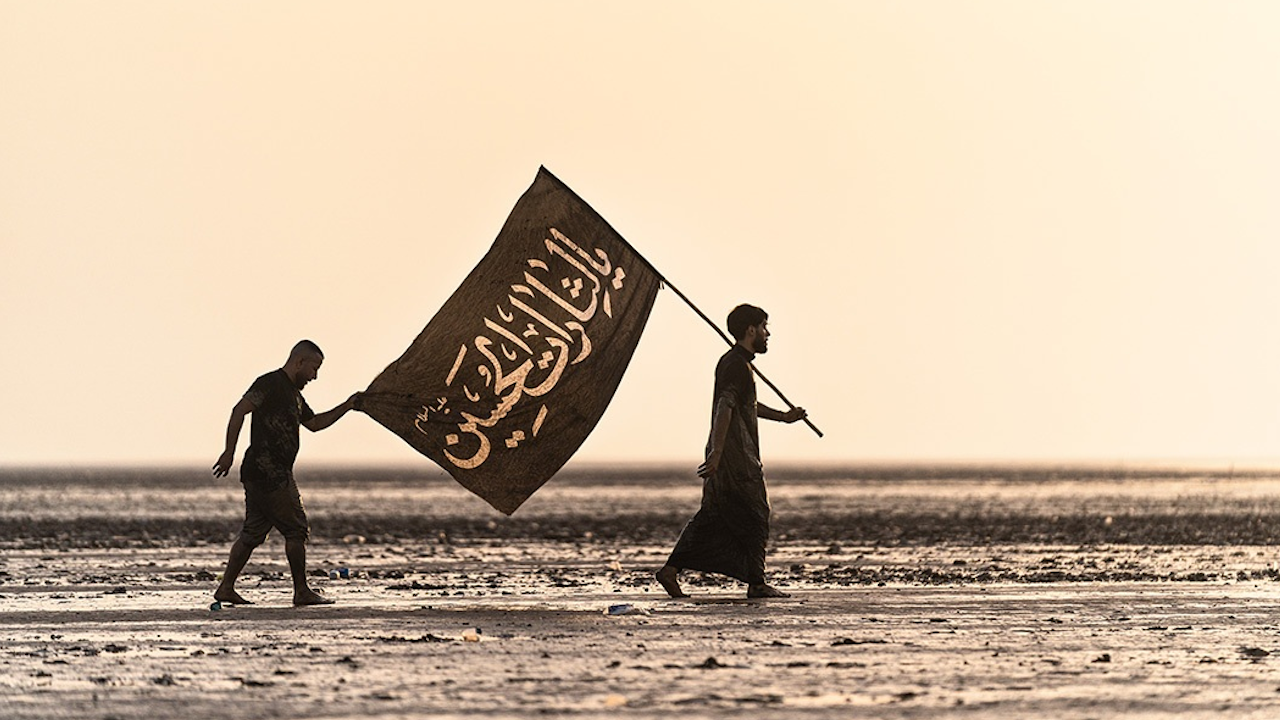
In a world where virtual narratives attempt to alter realities, walking toward Karbala is a kind of “testimony with the body.” The body of the pilgrim on the path of Arbaeen becomes a medium. This testimony of footsteps proves that Ashura has not ended; rather, Arbaeen is the starting point of the Ummah’s continuous presence on the front of truth.
“Ashhadu”: The Key to Understanding Ziyarat Arbaeen
Ziyarat Arbaeen, narrated by Shaykh al-Tusi from Safwan al-Jammal from Imam al-Sadiq (peace be upon him), has a deeply meaningful structure. The pilgrim first bears witness to the Imam’s identity: «أَشْهَدُ أَنَّكَ أَمِينُ اللهِ وَابْنُ أَمِينِهِ» – “I bear witness that you are the trustee of Allah and the son of His trustee.” Then he judges the quality of the Imam’s life and death: «عِشْتَ سَعِيداً وَمَضَيْتَ حَمِيداً وَمُتَّ فَقِيداً مَظْلُوماً شَهِيداً» – “You lived in felicity, departed praiseworthy, and died missed, oppressed, and martyred.” He then testifies to the Imam’s faithfulness to the divine covenant: «وَأَشْهَدُ أَنَّكَ وَفَيْتَ بِعَهْدِ اللهِ وَجَاهَدْتَ فِي سَبِيلِهِ حَتّى أَتَاكَ الْيَقِين» – “And I bear witness that you fulfilled the covenant of Allah and struggled in His path until certainty came to you.”
But the Ziyarat does not stop at reporting the past. After recognizing the Imam and judging the event, the pilgrim must also determine his own position: «اللّهُمَّ إِنّي أُشْهِدُكَ أَنّي وَلِيٌّ لِمَنْ وَالاهُ وَعَدُوٌّ لِمَنْ عاداهُ» – “O Allah, I call You to witness that I am a friend to whoever befriends him and an enemy to whoever opposes him.” Thus, “Ashhadu” moves from stating a historical fact to declaring a moral and social position.
The architecture of the Ziyarat is precise: first recognition, then judgment, and finally commitment.
One who does not know why the Imam rose is not an aware witness.
One who recognizes truth and falsehood but takes no position is not a just witness.
And one who holds a verbal position while acting in the opposite direction has not yet accepted the consequences of his testimony.
A Witness Is Not the Same as a Spectator
A spectator may see an event, be moved by it, and then return to ordinary life. A witness, however, understands seeing as a responsibility. Many knew the truthfulness of the Imam and grieved over his martyrdom, yet they paid no price to support the truth.
The Qur’an says: «كُونُوا قَوَّامِينَ بِالْقِسْطِ شُهَدَاءَ لِلَّهِ وَلَوْ عَلَى أَنْفُسِكُمْ» – “Be maintainers of justice, witnesses for Allah, even if it be against yourselves” (Surah al-Nisa, 4:135). In the Qur’anic view, testimony becomes valuable where interest, attachment, and even personal reputation do not prevent a person from speaking the truth. If the people of Kufa wished to move from spectators to witnesses, they first had to confess their own betrayal, fear, and expediency before accusing others.
For this reason, Arbaeen is not only a court in which the killers of the Imam are judged; it is also a mirror in which the conscience of the Ummah is judged. The pilgrim does not ask only, “What did they do to Husayn?” He is inevitably compelled to ask, “What would I do with the truth in a similar situation?”
From Testimony of the Tongue to Readiness for Support
The peak of Ziyarat Arbaeen is where testimony moves from the tongue to the heart, decision, and action: «وَقَلْبِي لِقَلْبِكُمْ سِلْمٌ، وَأَمْرِي لِأَمْرِكُمْ مُتَّبِعٌ، وَنُصْرَتِي لَكُمْ مُعَدَّةٌ» – “My heart is at peace with your heart, my affair follows your affair, and my support is prepared for you.”
This passage from the Ziyarat shows the architecture of human movement from inwardness to outward action and sketches three levels of loyalty:
- emotional and intellectual harmony;
- practical and personal obedience;
- and social, position-bearing readiness.
First, a person’s heart must be reconciled with the values of the Ahl al-Bayt (peace be upon them) and become concerned with what concerned the Imam. Then the program of his life must follow their guidance. Finally, he must keep his abilities and resources ready to support the truth. A successful visitation, then, is not one that merely produces more tears; it must produce greater readiness.
This readiness may sometimes mean speaking a forgotten truth and breaking the spiral of silence; sometimes defending a voiceless oppressed person; sometimes refusing an unlawful benefit; and sometimes raising a generation that can distinguish propaganda from truth. What all these shares is the departure from indifference. Through the words «نُصْرَتِي لَكُمْ مُعَدَّةٌ» – “my support is prepared for you” – Ziyarat Arbaeen pulls the pilgrim out of the safe zone of indifference and turns him into an active, responsible, witnessing element in society.
Arbaeen and the Responsibility of the Human Being Today
Ziyarat Arbaeen describes the aim of the uprising as follows: «وَبَذَلَ مُهْجَتَهُ فِيكَ لِيَسْتَنْقِذَ عِبَادَكَ مِنَ الْجَهَالَةِ وَحَيْرَةِ الضَّلَالَةِ» – “He gave the blood of his heart in Your path so that he might rescue Your servants from ignorance and the bewilderment of misguidance.” If the aim was liberation from ignorance and bewilderment, then commemorating Arbaeen must also lead to greater insight.
Ignorance is not merely not knowing a historical event. Sometimes a person has much information but lacks the power of discernment amid conflicting narratives. Sometimes he knows the truth, but fear of isolation prevents him from declaring it. Sometimes he sees the oppressed, but personal interest forces him into silence. Arbaeen exists to heal this gap between knowing and standing.
The pilgrim today must ask himself whether his presence helps make the truth clearer; whether his family, society, and surrounding media see a more accurate image of the school of Husayn (peace be upon him) through his conduct; and whether love for the Imam has made him firmer in speaking the truth, seeking justice, fulfilling covenants, and supporting the oppressed. If such a transformation does not occur, a person may be present among the assembly of witnesses while still not having moved beyond the rank of a spectator.
Final Word
Arbaeen may be understood as the link between “the martyrdom of the Imam” and “the responsibility of the Ummah.” On Ashura, Imam Husayn (peace be upon him) testified with his blood that the religion of God cannot be reduced to the rule of oppression. After Ashura, the Ahl al-Bayt (peace be upon them), through their sermons and clarifications, did not allow the Umayyad apparatus to appropriate the meaning of that blood. And in Arbaeen, this responsibility was transferred from the first witnesses to successive generations of the Ummah.
This is the philosophy behind the repetition of “Ashhadu” in Ziyarat Arbaeen: the pilgrim first recognizes the Imam, then judges his truthfulness and the falsehood of his enemies, determines his own place in this confrontation, and finally declares his readiness to continue the path. In this way, visitation becomes not a memorial of the past, but a covenant for the future.
On Ashura, the question placed before the Imam was whether he would give his blood for the survival of truth. On Arbaeen, the question placed before the Ummah is whether it will bear witness to that truth-or conceal it amid the crowd of fears, interests, and expediencies. Ashura was the day of the Imam’s martyrdom; Arbaeen is the appointed time for the Ummah to become witnesses.