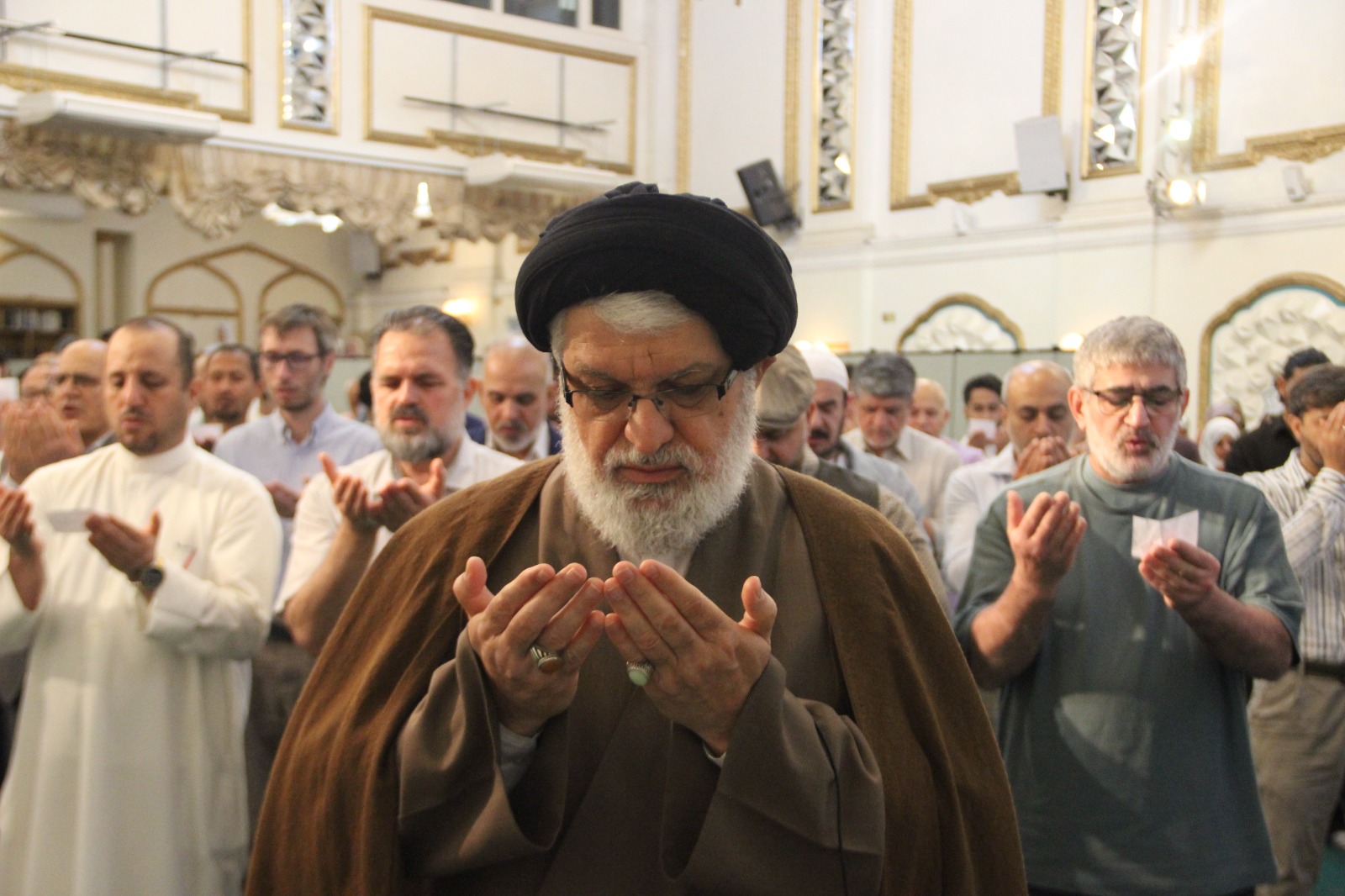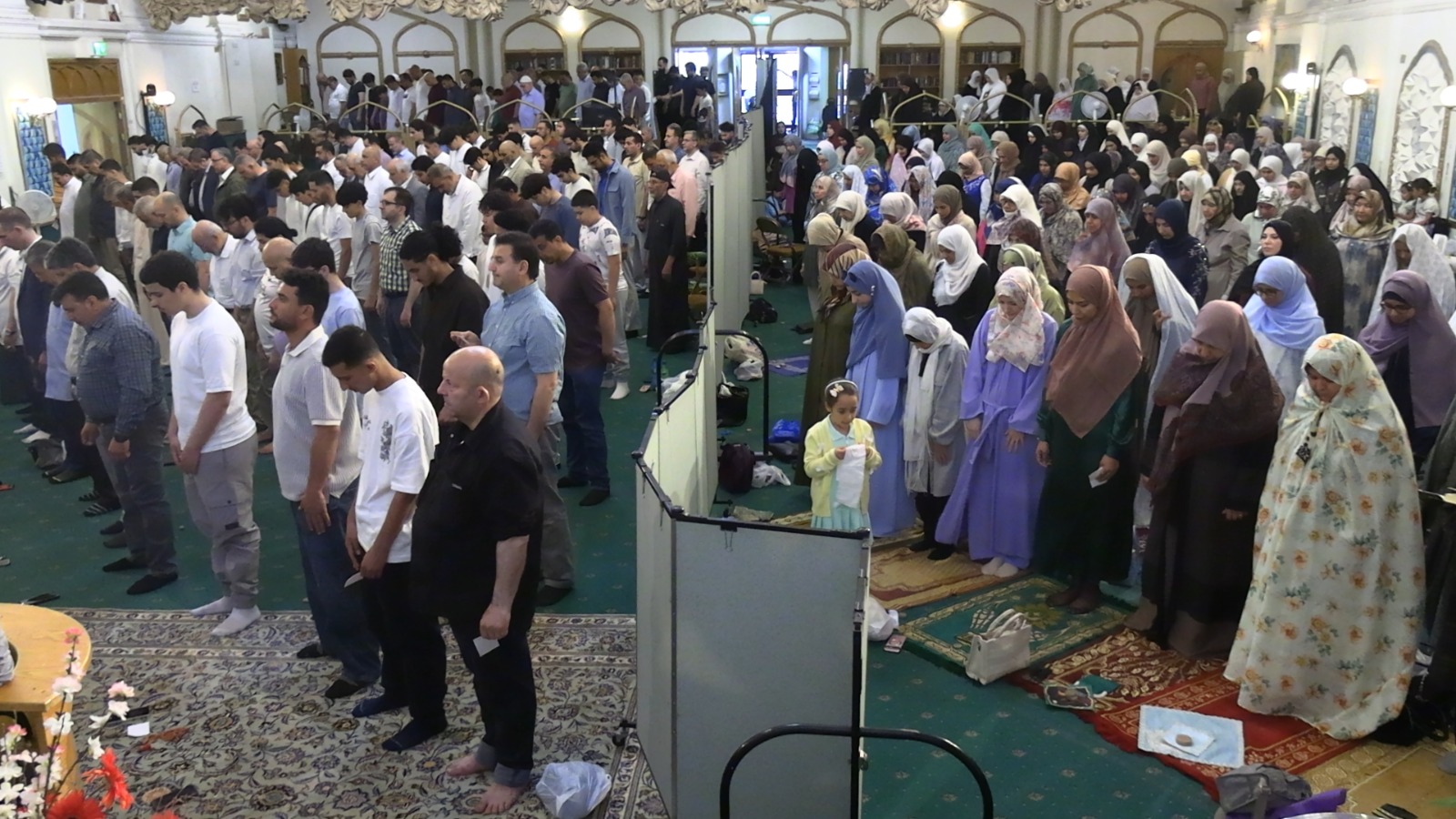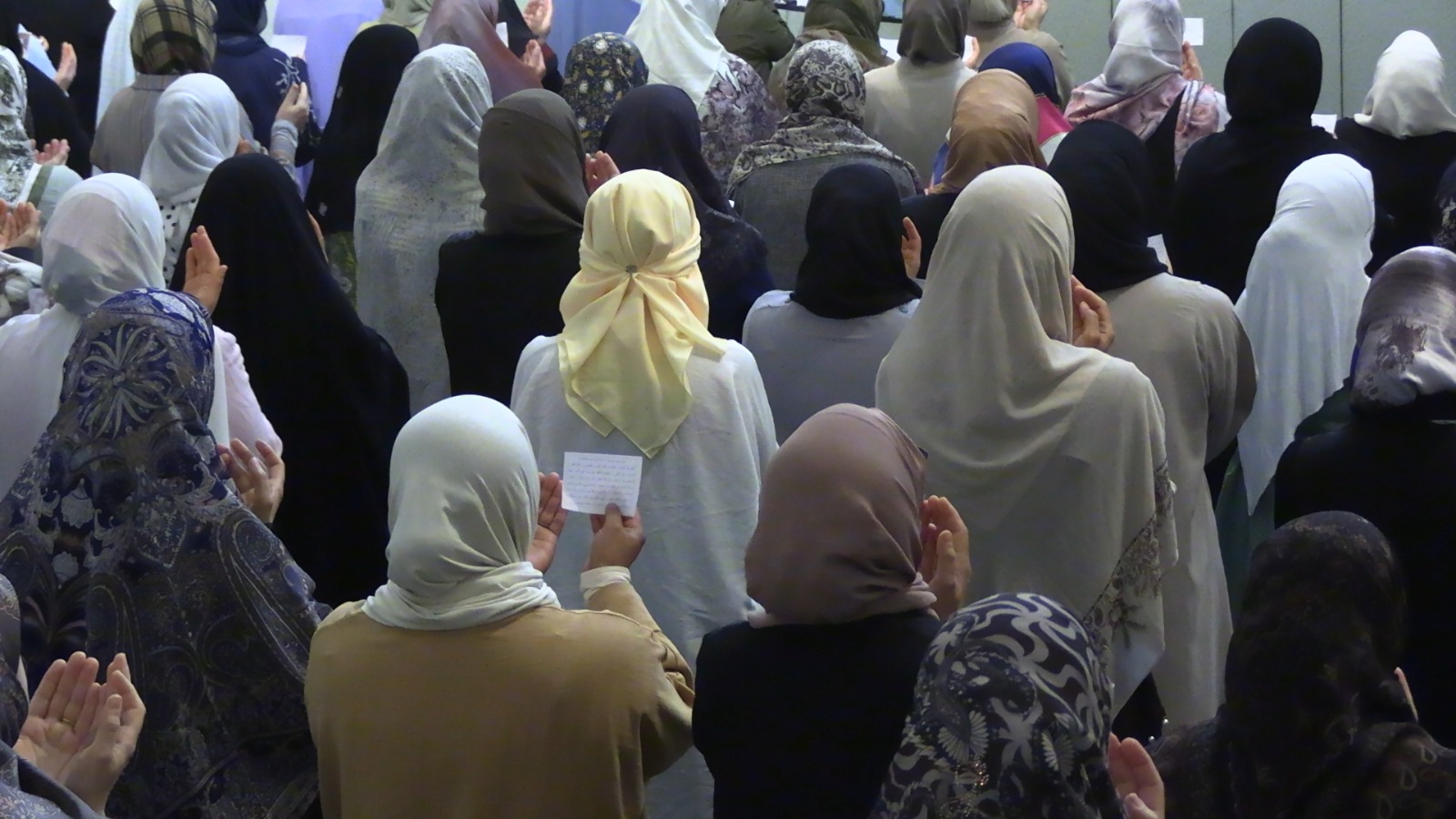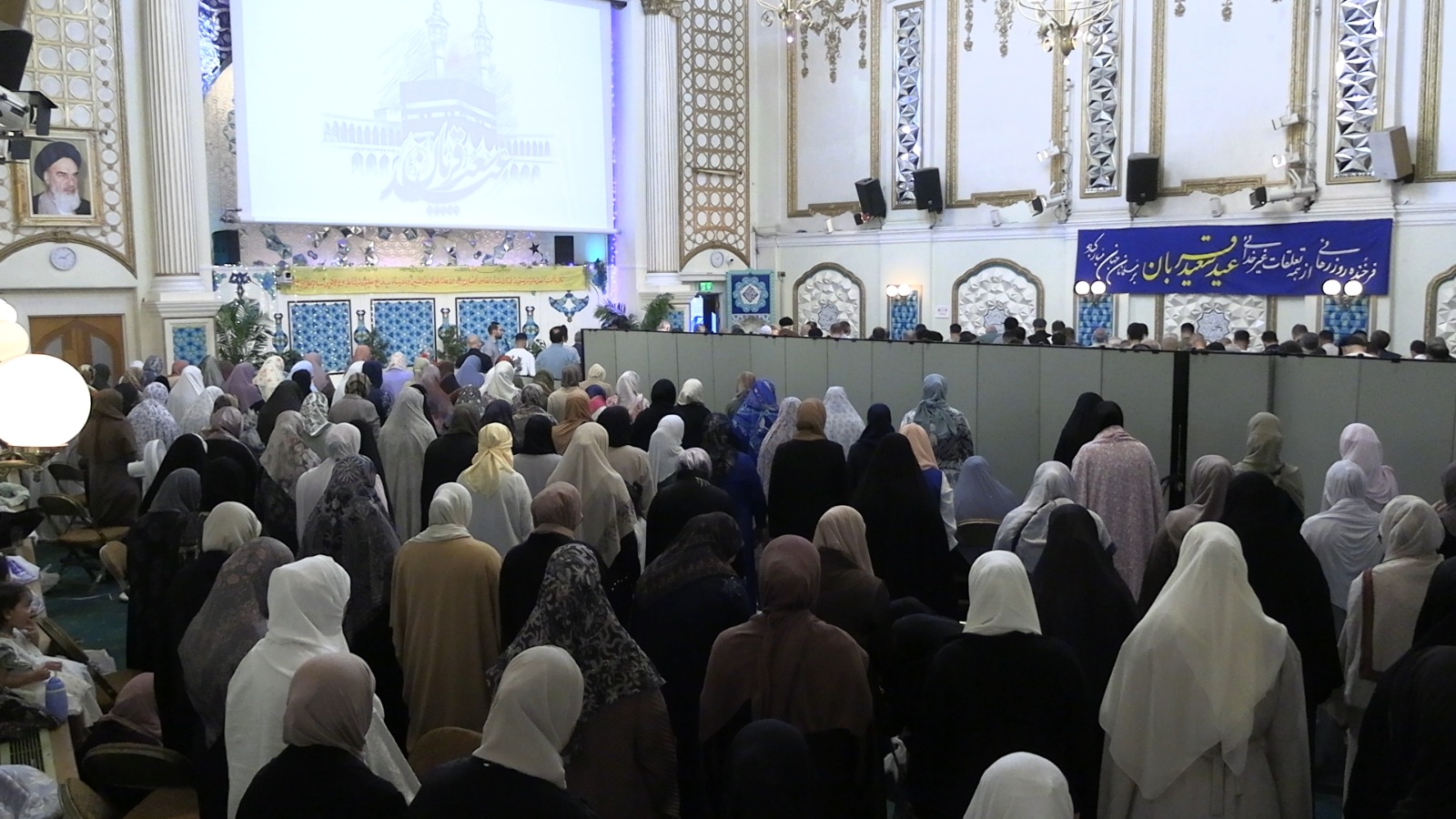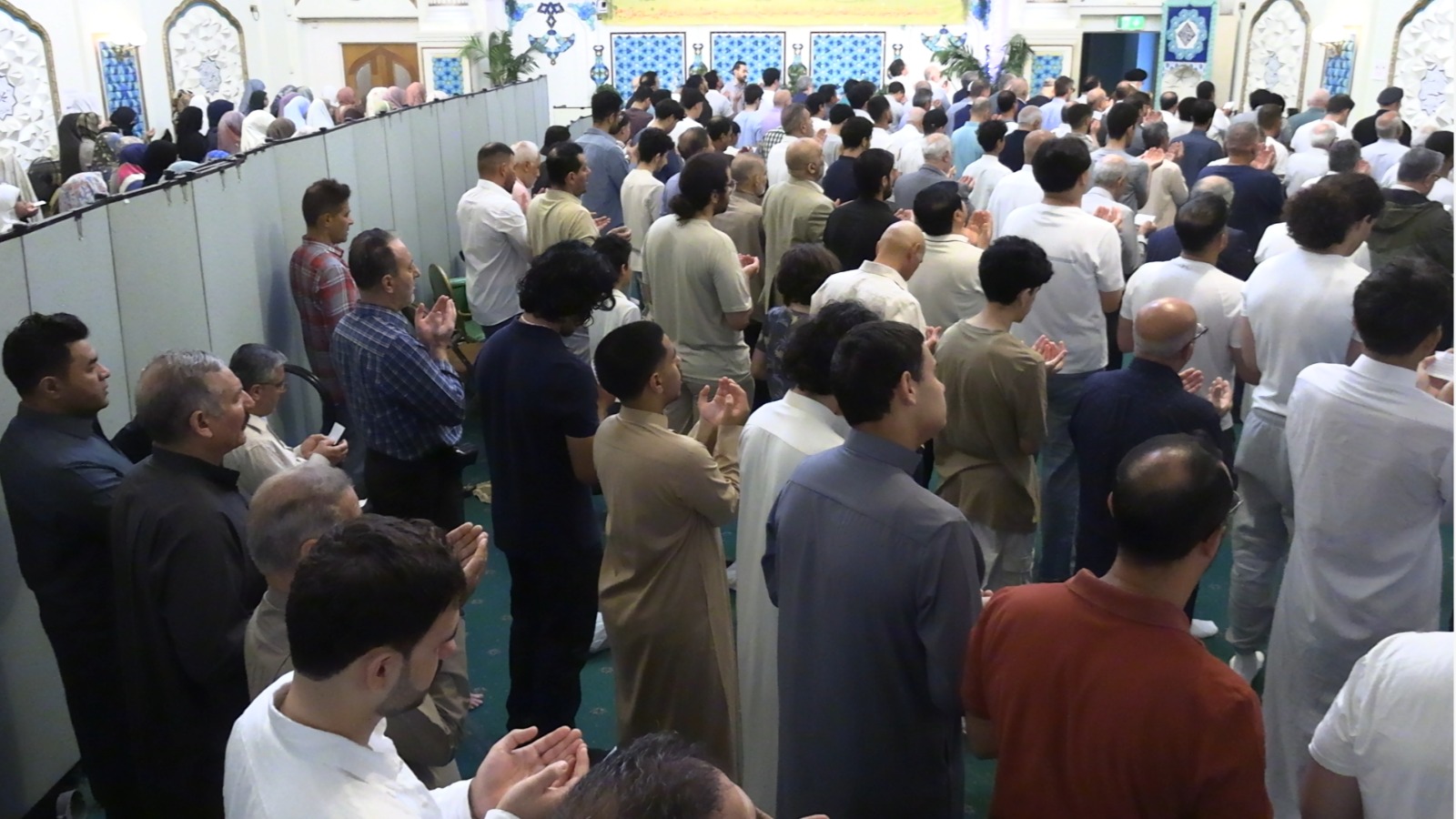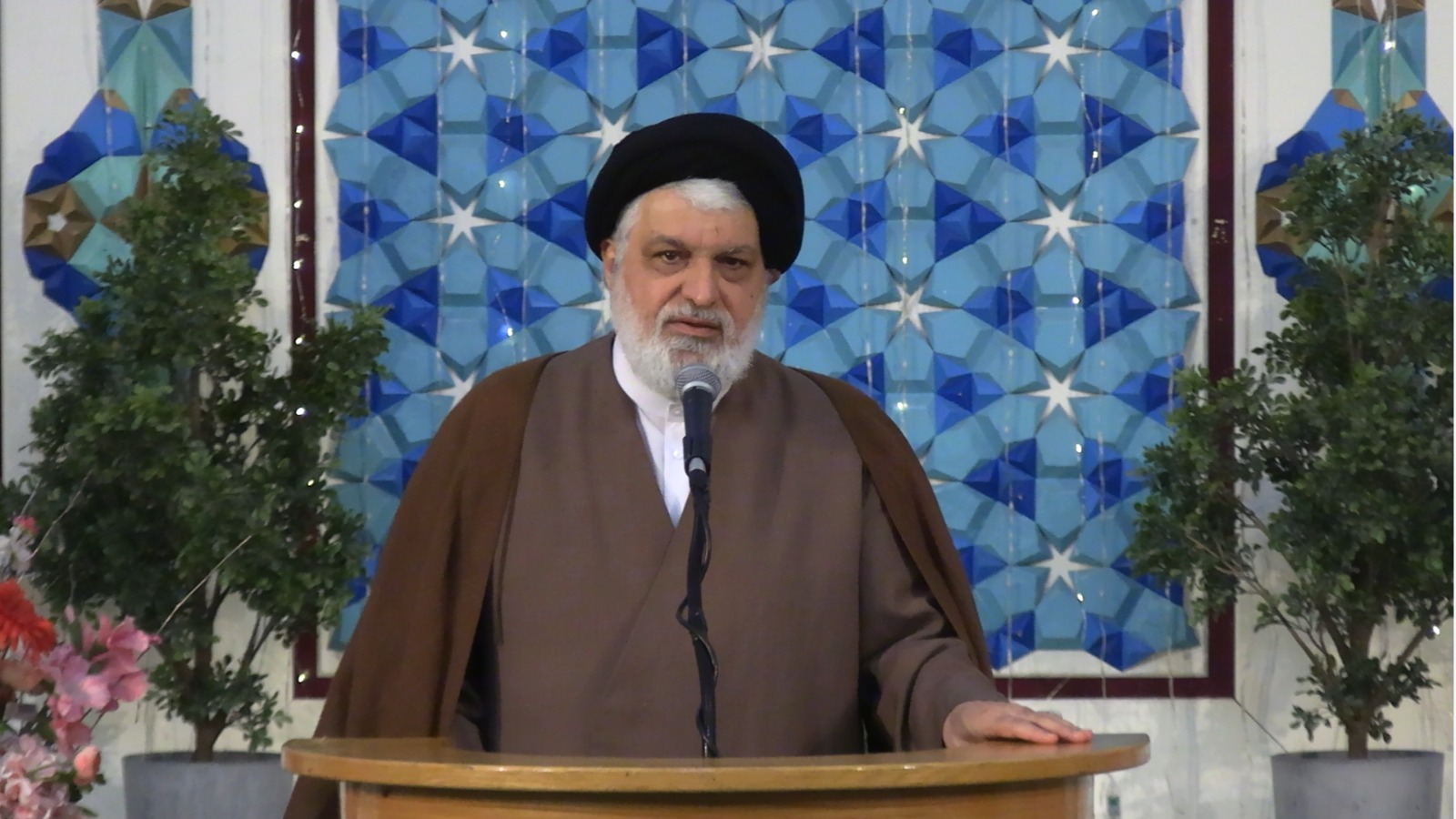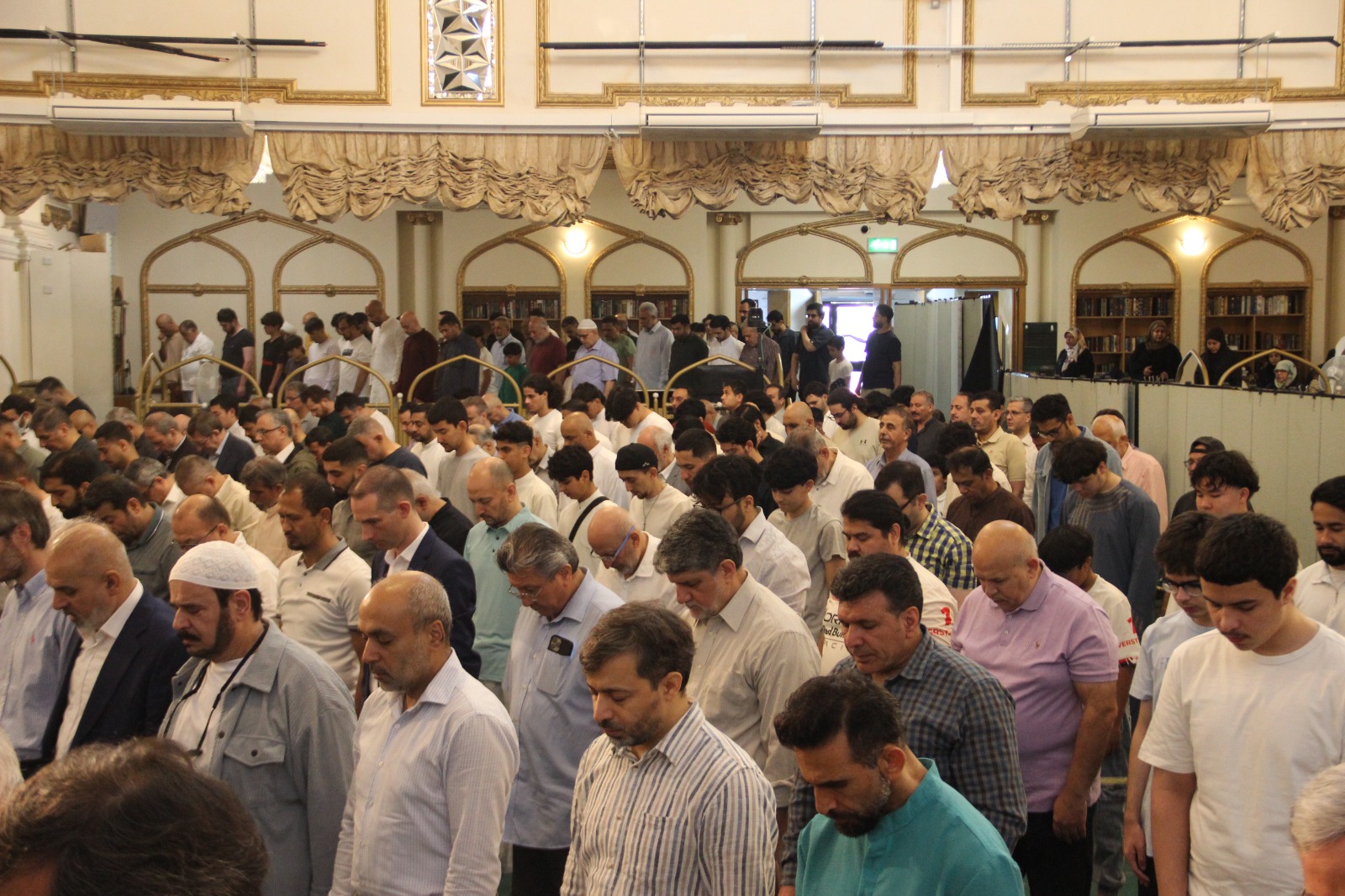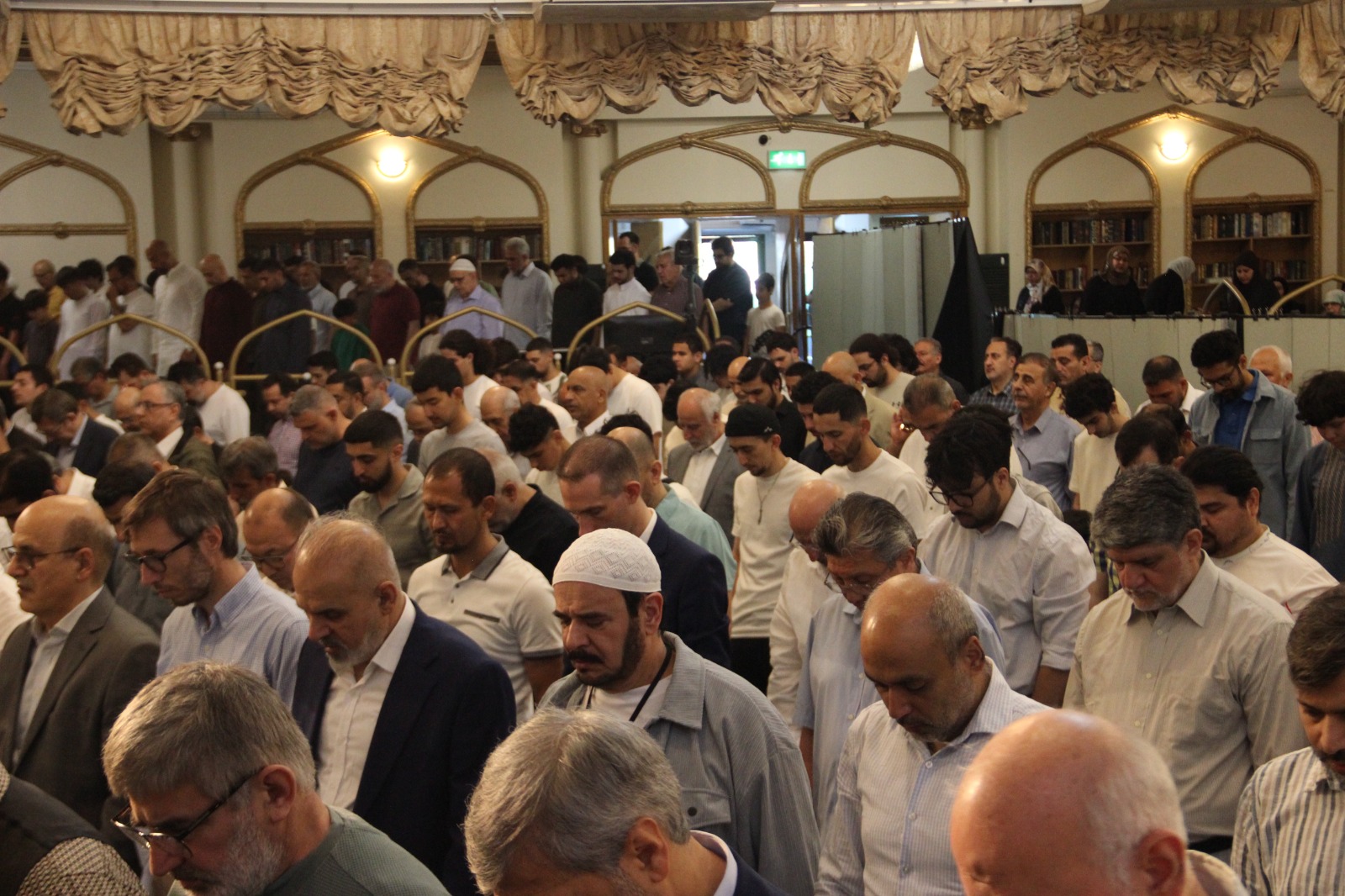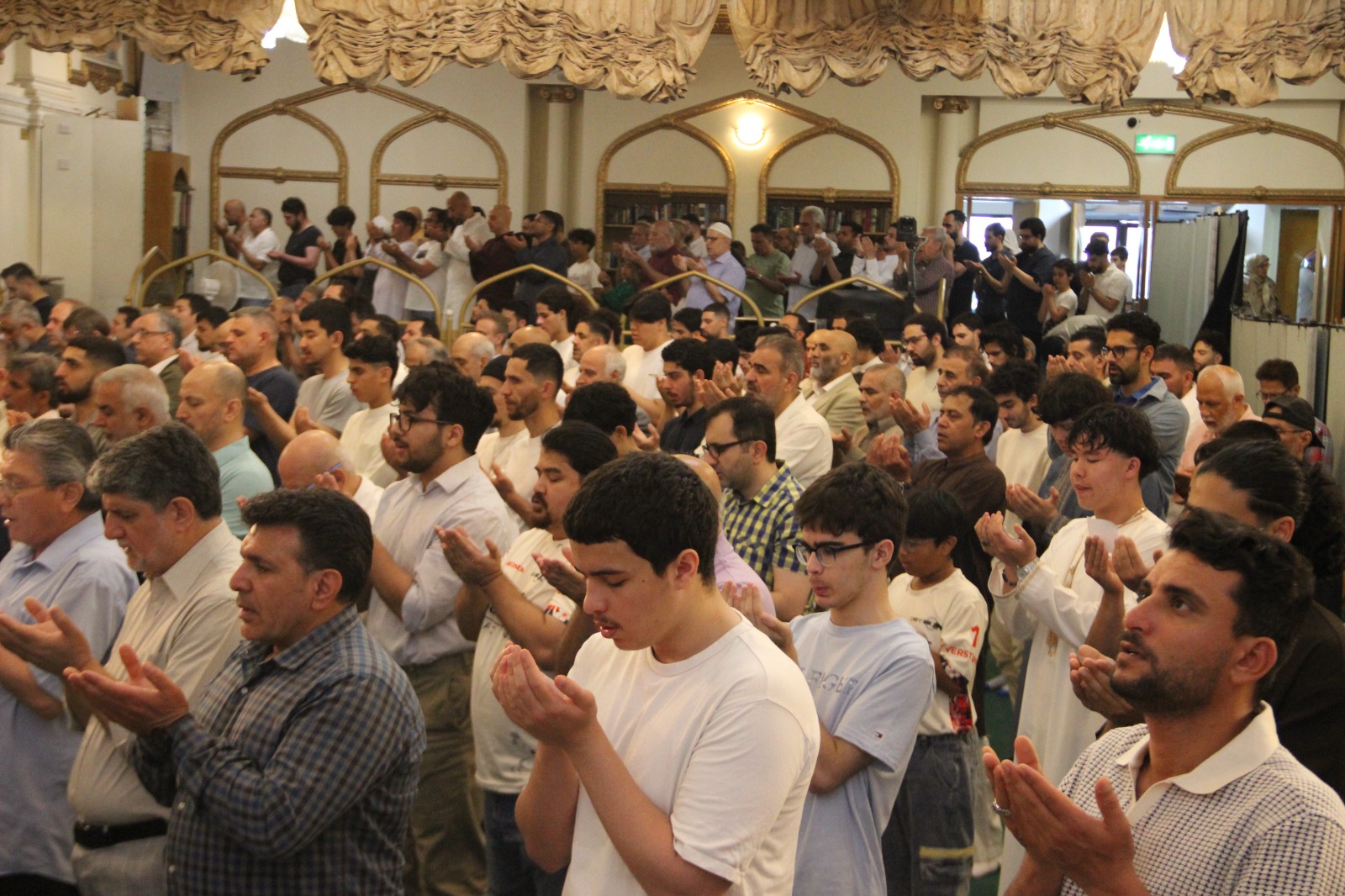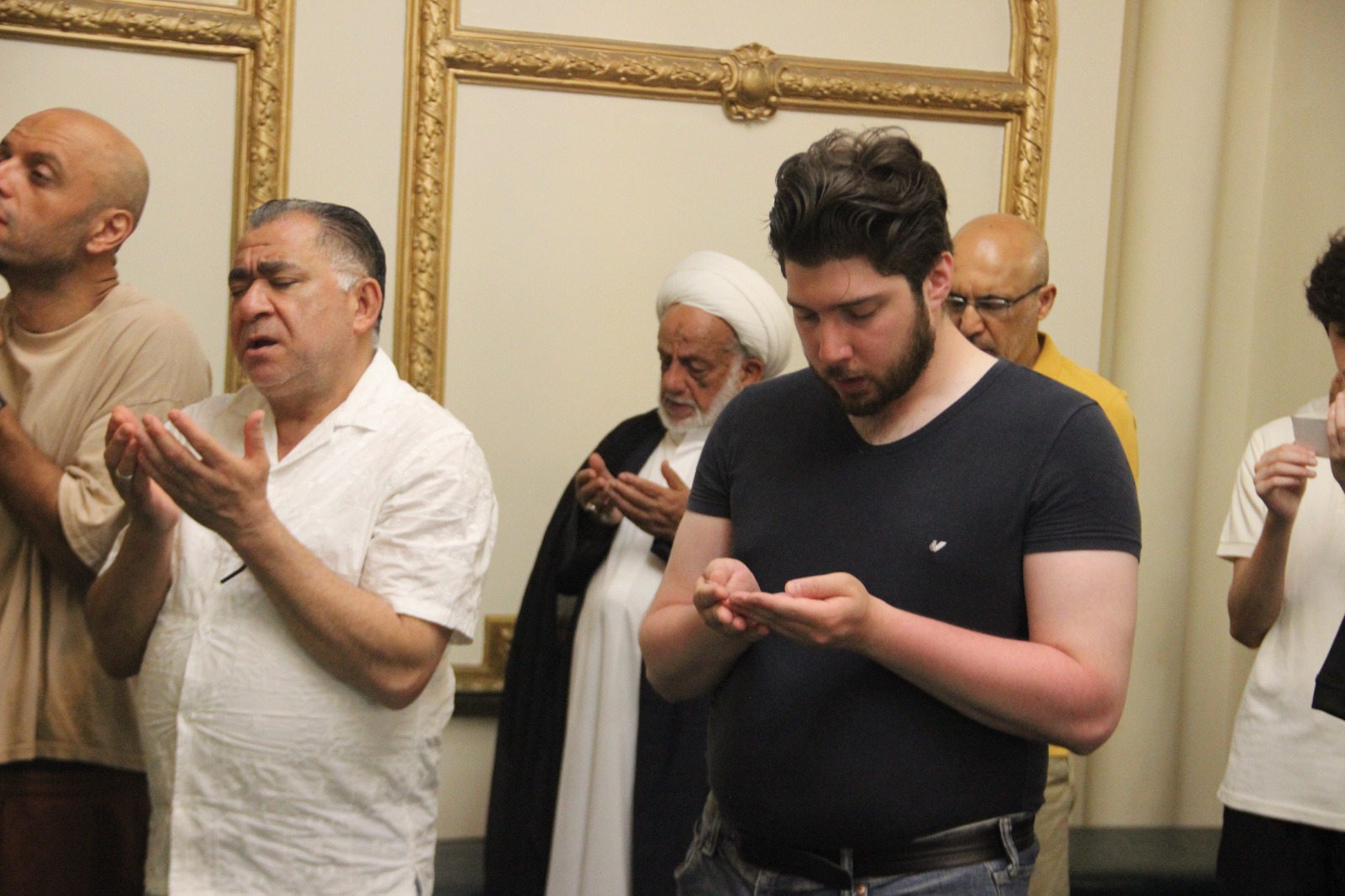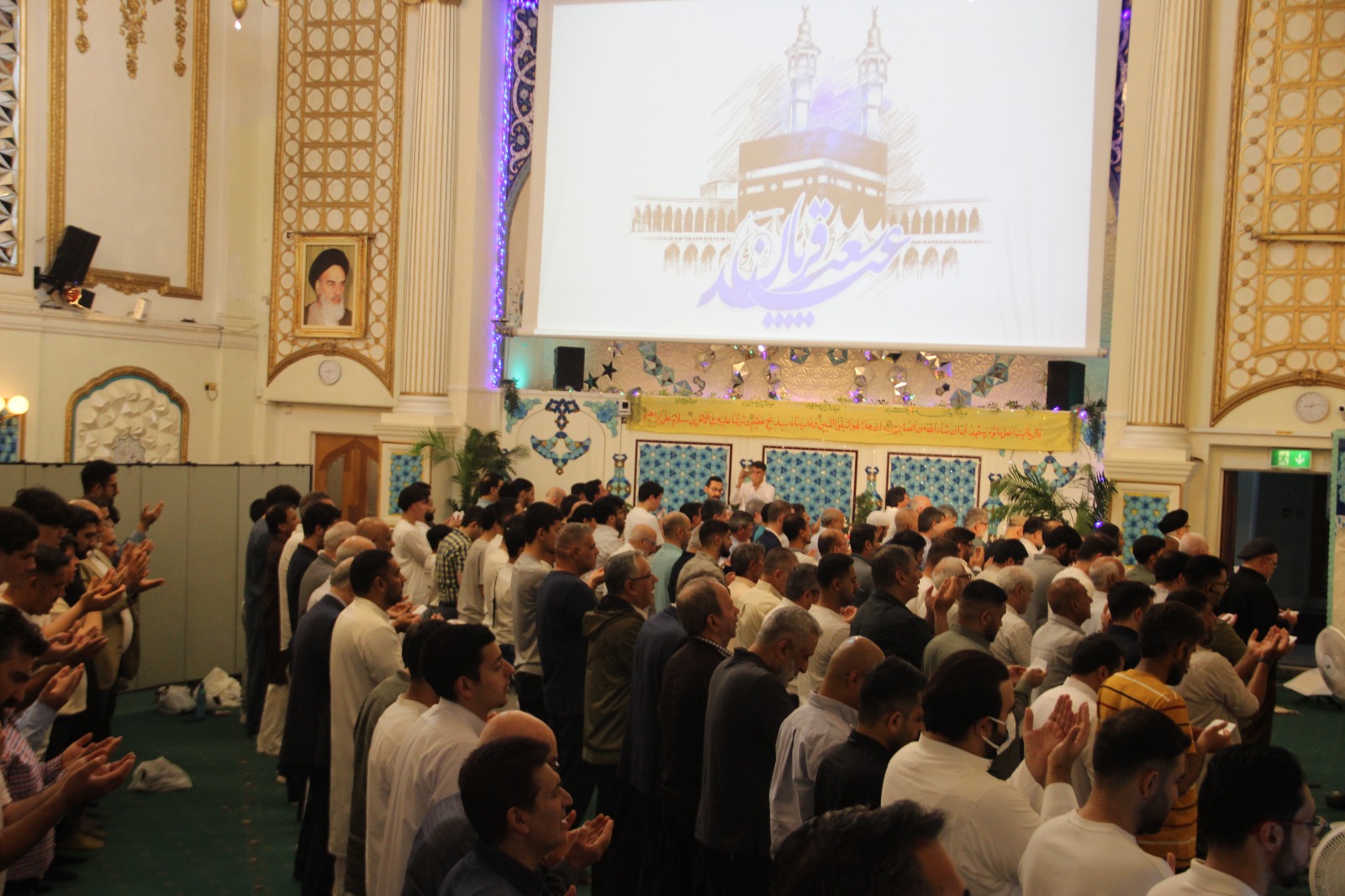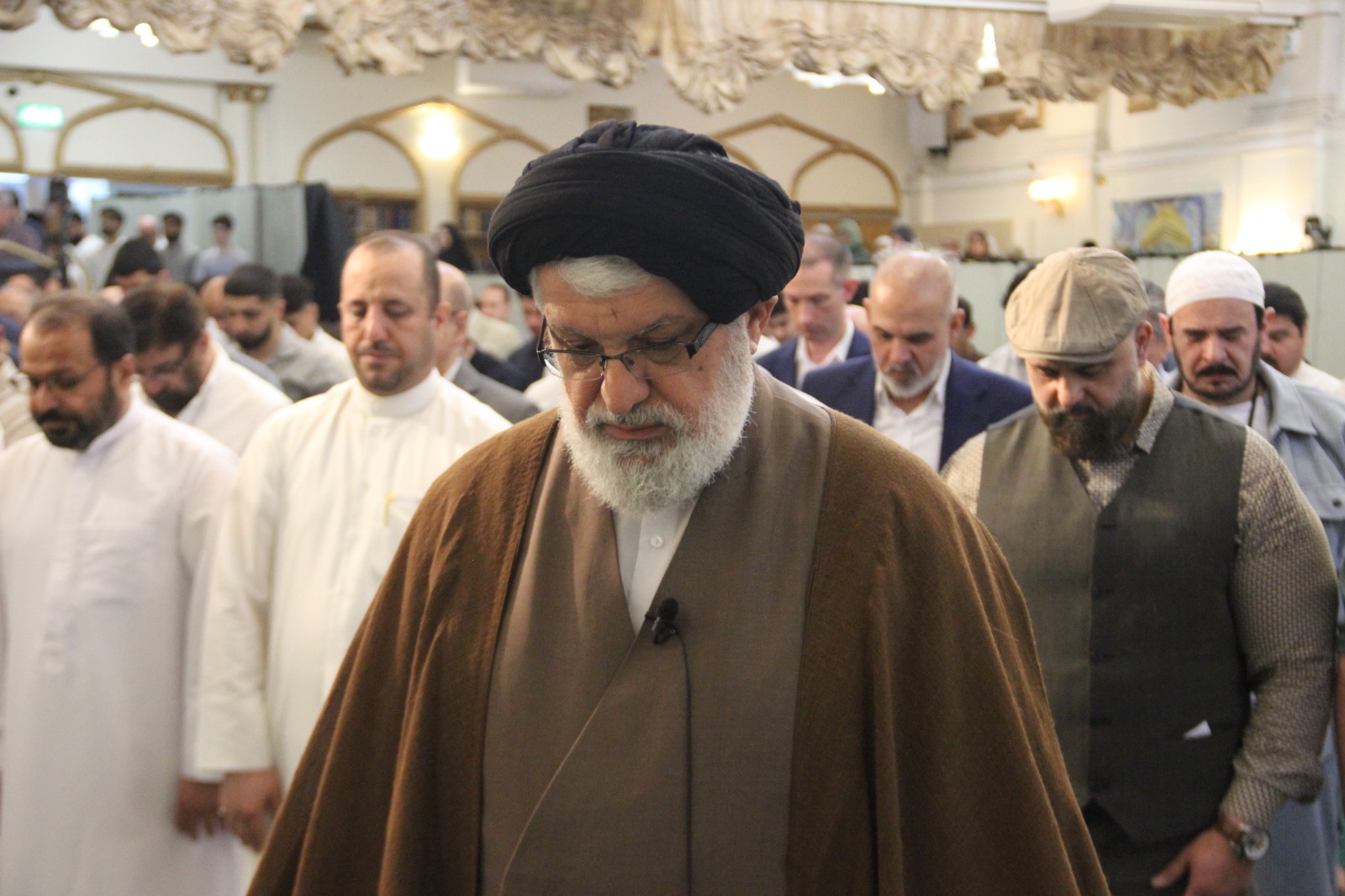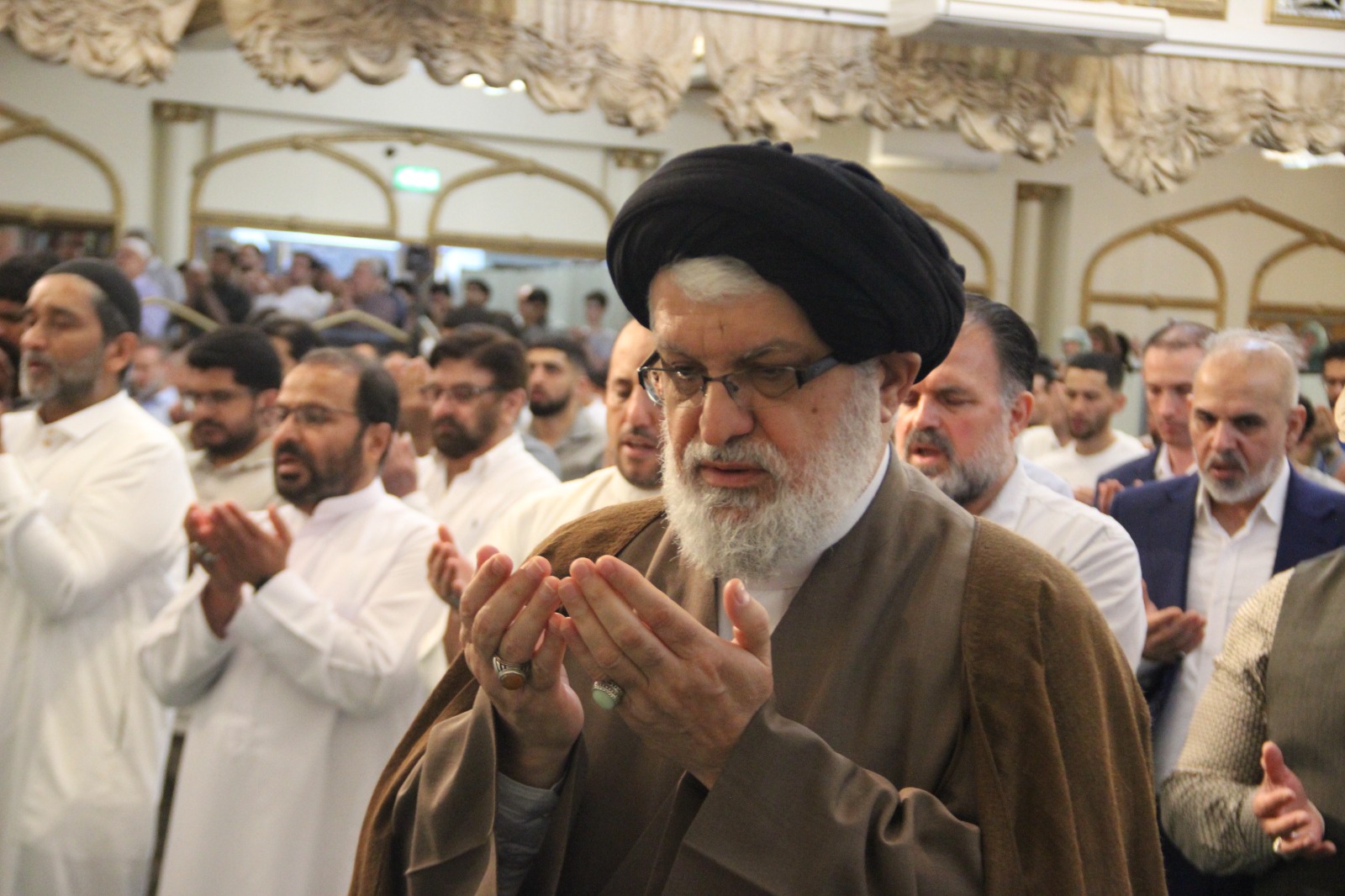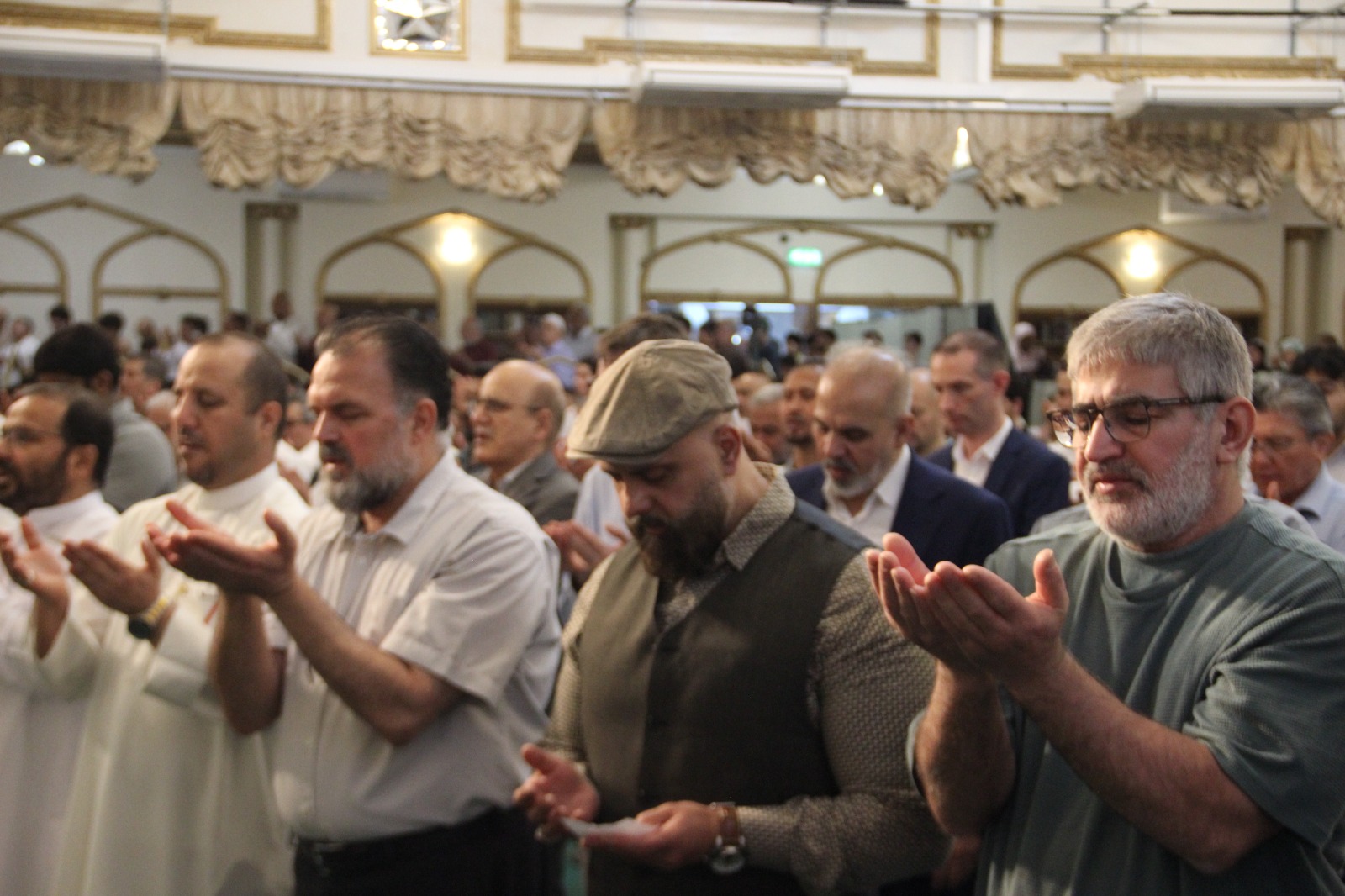




On the blessed occasion of Eid al-Adha, the celebration of servitude, sincerity, and freedom from worldly attachments, the Islamic Centre of England welcomed hundreds of Muslims living in London on Wednesday, 27 May 2026, for the congregational Eid prayer led by Hujjat al-Islam wal-Muslimeen Sayyid Hashem Moosavi, the Imam of the Islamic Centre of England.
The ceremony began with the recitation of verses from the Holy Qur’an. Worshippers then raised the call of “Labbayk”, expressing their devotion and servitude before Allah (swt), as they prepared to perform the Eid al-Adha prayer.
In the first sermon, Hujjat al-Islam wal-Muslimeen Moosavi congratulated Muslims around the world, and especially Muslims living in the United Kingdom, on the arrival of Eid al-Adha. He advised the worshippers to observe divine piety and, referring to verses of the Holy Qur’an, emphasised that the only path to salvation from hardship and protection from deviation and misguidance is steadfastness in taqwa and consciousness of God.
In the second sermon, the Imam of the Islamic Centre of England reflected on the meaning of the “inner Ismails” within every human being. He described Eid al-Adha as an opportunity to free oneself from attachments that hold the soul back. He stated that every year, with the arrival of Eid al-Adha, millions of Muslims across the world revive the memory of one of the greatest scenes of servitude in the history of tawhid, the moment when Prophet Ibrahim (as) was ready to sacrifice the most beloved treasure of his life in the path of God, while Prophet Ismail (as), with faith and serenity, submitted himself to the divine command.
He asked whether Eid al-Adha is merely the commemoration of a historical event, or simply limited to the sacrifice of an animal, and explained that this Eid carries an everlasting message for all human beings in every age.
Hujjat al-Islam wal-Muslimeen Moosavi noted that “Ismail” represents a person’s greatest attachment. He explained that divine tests often begin precisely at the point where the heart is most attached, because true human growth is not possible without passing beyond the attachments that prevent spiritual progress.
He described wealth, position, fame, comfort-seeking, the pursuit of pleasure, excessive attachment to the world, and worship of the self as some of the hidden “Ismails” of modern human beings. He added that many outward acts of sacrifice only gain their true value when a person is able to sacrifice the rebellious ego and selfishness within.
The Imam of the Islamic Centre of England also described Eid al-Adha as “a station of awakening and self-knowledge.” He said that Eid al-Adha is, in reality, an annual meeting point for deep self-reflection and a measure of the sincerity of one’s faith. The modern human being, caught in the noise and rush of daily life, is invited on this day to pause for a moment in the privacy of the soul and ask honestly: What is preventing my spiritual flight? What is my greatest attachment? And where is the true boundary of my servitude to God?
He emphasised that the answer to these questions reveals the true measure of a person’s faith and the sincerity of their servitude to Allah (swt).
Addressing the question of what true sacrifice really means, Hujjat al-Islam wal-Muslimeen Moosavi referred to verse 37 of Surah al-Hajj and explained that Islam never views sacrifice as merely an outward ritual or a tradition performed out of habit. Rather, the reality of this act of worship lies in sincerity, purity of intention, and inner transformation.
Reciting the noble verse, “It is neither their meat nor their blood that reaches Allah, but it is your taqwa that reaches Him,” he added that what reaches the divine presence is not the flesh or blood of the sacrifice, but the taqwa, sincerity, and true servitude of the human being.
In the final part of his sermon, the Imam of the Islamic Centre of England stressed the importance of preserving the spirit and culture of sacrifice within society. He warned that if the culture of giving, selflessness, and sacrifice is removed from society, that society will gradually suffer moral erosion, excessive individualism, consumerism, and self-interest. In such an atmosphere, people no longer see one another as companions in a shared human community, but as rivals in a race for worldly gain.