




Seyed Hashem Moosavi
Introduction
Every year, as the month of Muharram arrives, a fundamental question confronts our religious conscience: How did Ashura save God’s religion from the danger of distortion and extinction, and what responsibility does it place upon us today?
Answering this question is not merely a matter of revisiting a historical event. Rather, it is about understanding a mission that began in Karbala and continues to this very day.
The well-known maxim: «الإسلامُ مُحمَّدِیُّ الحُدوثِ و حُسَینِیُّ البَقاء» (“Islam is Muhammadan in its origin and Husayni in its survival”) captures the essence of the Shi’a understanding of the philosophy of Ashura.
Although this exact wording does not appear in the narrations of the Ahl al-Bayt (peace be upon them), it expresses a profound reality: the Messenger of Allah (peace and blessings be upon him and his family) established Islam, while Imam Husayn (peace be upon him), through his sacrifice and uprising, rescued it from distortion and extinction.
This truth is reflected in the famous Ziyarat al-Arba’in: «إِنَّ الْحُسَيْنَ بَذَلَ مُهْجَتَهُ فِيكَ لِيَسْتَنْقِذَ عِبَادَكَ مِنَ الْجَهَالَةِ وَ حَيْرَةِ الضَّلَالَةِ» “Indeed, al-Husayn sacrificed his life for Your sake in order to rescue Your servants from ignorance and the bewilderment of misguidance.”
However, the statement that Islam is Husayni in its survival can only be fully appreciated when we understand the danger facing Islam during the time of Imam Husayn (peace be upon him). Was the Muslim community merely suffering under a corrupt ruler, or was the very essence and identity of Islam on the verge of being transformed and destroyed?
If Islam truly stood at such a critical crossroads, how did Imam Husayn save it through his movement? And what responsibilities did this salvation place upon subsequent generations?
Answering these questions leads us to a deeper understanding of the philosophy of Ashura.
Part One: What Danger Was Islam Facing?
The danger confronting Islam during the time of Imam Husayn (peace be upon him) was far greater than the personal corruption of Yazid. The real crisis was that the Muslim community was gradually moving toward destruction while still maintaining a religious appearance. Its outward form remained Islamic, but its inner reality was becoming increasingly detached from the true teachings of Islam.
Through wealth, coercion, and deception, the Umayyads had created conditions that threatened to bury Islam long before the tragedy of Ashura. This deviation manifested itself in several major ways.
- Transforming the Islamic Caliphate into a Hereditary Monarchy
Before Mu’awiyah, at least the outward structure of Islamic governance and the spirit of justice and equality were preserved. Mu’awiyah, however, formally established a hereditary monarchy and appointed Yazid as his successor.
Aristocratic privilege, racial discrimination, and the misuse of public wealth gradually replaced the Prophetic model of governance.
Imam Husayn did not rise merely against a political error. He stood against a fundamental transformation in the nature of Islamic rule itself. Had this process become fully established, little would have remained of the concepts of Imamah, justice, and the ruler’s accountability before God.
- The Legitimization of Open Sin in the Name of Religion
Historical sources describe Yazid as notorious for drinking wine, gambling, indulgence in worldly pleasures, and disregard for divine commandments.
The greatest danger was not his personal sins alone. Rather, it was the fact that he openly challenged the foundations of religion and even denied the reality of revelation and prophethood.
In a famous poetry attributed to him, he declared: «لَعِبَتْ هاشِمُ بِالْمُلْكِ فَلا خَبَرٌ جاءَ وَ لا وَحْیٌ نَزَلَ»
“Banu Hashim merely played a game of kingship; no revelation came and no divine message descended.”
With these words, he reduced revelation and prophethood to a political enterprise, yet he was still presented to the Muslim world as “Khalifat Rasul Allah” (the Successor of the Messenger of Allah) and “Amir al-Mu’minin” (Commander of the Faithful).
Pledging allegiance to such a ruler would have meant endorsing his conduct as an Islamic model.
For this reason, Imam Husayn (peace be upon him) famously declared: «وَعَلَى الإِسْلَامِ السَّلَامُ إِذْ قَدْ بُلِيَتِ الأُمَّةُ بِرَاعٍ مِثْلِ يَزِيد» “One may bid farewell to Islam when the Ummah becomes afflicted with a ruler like Yazid.”
- The Distortion of Values and the Systematic Manipulation of Religious Concepts
One of the most dangerous policies of the Umayyads was their deliberate inversion of Islamic values through scholars and preachers who sold their religion for worldly gain.
They distorted the concept of divine decree (qadar) in order to persuade people that poverty, oppression, and political injustice were simply God’s will.
As a result:
- Oppression was rebranded as “maintaining order and security.”
- Silence in the face of tyranny was presented as “wisdom” and “prudence.”
- Flattery of rulers became a sign of “religiosity.”
- Opposition to corruption was condemned as “rebellion against the Caliph” and “causing division.”
Society had become so desensitized that the grandson of the Prophet was labelled a rebel, while Yazid was portrayed as the defender of religion.
This distortion went so far that many sincere and pious individuals-even some prominent figures of the Muslim community-viewed Imam Husayn’s uprising as contrary to the interests of the Ummah.
Abdullah ibn Umar was among those who encouraged people to remain silent and avoid confronting the government, preferring social stability over resistance to political deviation. Even Muhammad ibn al-Hanafiyyah, Imam Husayn’s own brother, initially advised caution out of concern for the Imam’s safety and the consequences of the movement.
At the same time, Umayyad propaganda had so thoroughly corrupted religious concepts that many of the perpetrators of Karbala genuinely considered themselves defenders of Islam.
Historical reports indicate that when Shimr ibn Dhi al-Jawshan was questioned about his role in killing the grandson of the Prophet, he justified his actions on the grounds of obedience to the ruler and preservation of the unity of the Muslim community.
This was precisely the dangerous inversion created by the Umayyads: obedience to the ruler had replaced obedience to God, and preserving the regime was presented as preserving the religion.
- The Suspension of Enjoining Good and Forbidding Evil
Many of the elites had been bought with wealth, while large segments of society had become paralyzed by fear of the sword or by a desire for personal comfort and safety.
Imam Husayn (peace be upon him) explicitly identified the revival of this vital obligation as one of the primary reasons for his uprising. He declared: «إِنَّمَا خَرَجْتُ لِطَلَبِ الإِصْلَاحِ فِي أُمَّةِ جَدِّي، أُرِيدُ أَنْ آمُرَ بِالْمَعْرُوفِ وَ أَنْهَى عَنِ الْمُنْكَرِ» “I have risen only to seek reform in the nation of my grandfather. I desire to enjoin what is right and forbid what is wrong.”
When this principle is abandoned, social accountability disappears, and the religious community begins to collapse from within.
The significance of this issue becomes even clearer when we realize that al-amr bil-ma‘ruf wa al-nahy ‘an al-munkar (enjoining good and forbidding evil) is not merely about correcting individual behaviour. In Islamic thought, it is the most important mechanism for reforming society and restraining corrupt power.
A society in which scholars, community leaders, influential individuals, and ordinary people remain silent in the face of political and moral corruption gradually loses its ability to distinguish truth from falsehood.
The Messenger of Allah (peace and blessings be upon him and his family) warned that when enjoining good and forbidding evil are abandoned, the wicked gain control over society, and eventually even the prayers of the people go unanswered.
Likewise, Imam Ali (peace be upon him) taught that all righteous deeds-even jihad in the path of God-are insignificant compared to enjoining good and forbidding evil, just as a drop of water is insignificant compared to a vast ocean. This is because the preservation of all other Islamic values depends upon the preservation of this obligation.
In reality, one of the central aims of Ashura was to restore this forgotten principle to the heart of Muslim social life and to teach future generations that silence in the face of deviation is itself a form of participation in it.
- The Elimination of the Ahl al-Bayt from Religious Authority
The Umayyads sought to completely destroy the intellectual, spiritual, and religious authority of the Ahl al-Bayt (peace be upon them).
Their objective was to ensure that no independent voice remained capable of evaluating the actions of rulers according to the standards of divine guidance.
Had Imam Husayn (peace be upon him) remained silent or pledged allegiance to Yazid, the exclusion of the Ahl al-Bayt from religious leadership would have gained permanent legitimacy in the eyes of the Muslim world.
Part Two: How Did Ashura Preserve Islam?
Through the sacrifice of himself, his family members, and his companions, Imam Husayn (peace be upon him) delivered a profound spiritual and psychological shock to a community that had fallen into complacency and heedlessness.
His uprising preserved Islam through several distinct mechanisms.
- Separating True Islam from Umayyad Islam
Before Karbala, many ordinary Muslims assumed that whatever the ruler did represented Islam itself.
The martyrdom of the grandson of the Messenger of Allah (peace and blessings be upon him and his family) tore away the mask from the face of the Umayyad regime.
People came to understand that the name of Islam, when detached from justice, piety, and commitment to truth, is nothing more than an empty shell.
Ashura clearly distinguished the path of tyranny from the path of authentic religion.
- Reviving the Conscience of the Ummah and the Spirit of Resistance
From a purely military perspective, Ashura appeared to be a defeat.
In reality, however, it shattered the culture of fear that had gripped the Muslim community.
It taught Muslims that truth is not measured by numbers and that righteousness does not depend upon having a majority.
The movement generated a wave of awakening that inspired later uprisings, including the movements of the Tawwabin and Mukhtar, and prevented future rulers from erasing Islamic teachings without opposition.
- Establishing a Permanent Standard for History
Imam Husayn (peace be upon him) established an enduring criterion through his famous declaration: «مِثْلِي لَا يُبَايِعُ مِثْلَ يَزِيد» “Someone like me cannot give allegiance to someone like Yazid.”
This statement was not merely about two individuals. It became a timeless measure through which every generation can evaluate itself, its leaders, and its responsibilities.
Whenever truth and falsehood confront one another, this principle remains relevant.
- Creating a Lasting System for Preserving and Transmitting the Message
The Umayyads might have been able to suppress an ordinary political revolt, but the emotional, spiritual, and moral dimensions of Karbala could not be erased.
The gatherings of mourning, pilgrimage (ziyārah), elegies, and the narration of the events of Karbala-preserved and promoted by Imam al-Sajjad (peace be upon him) and Lady Zaynab (peace be upon her)-became a permanent means of transmitting the message of authentic Islam.
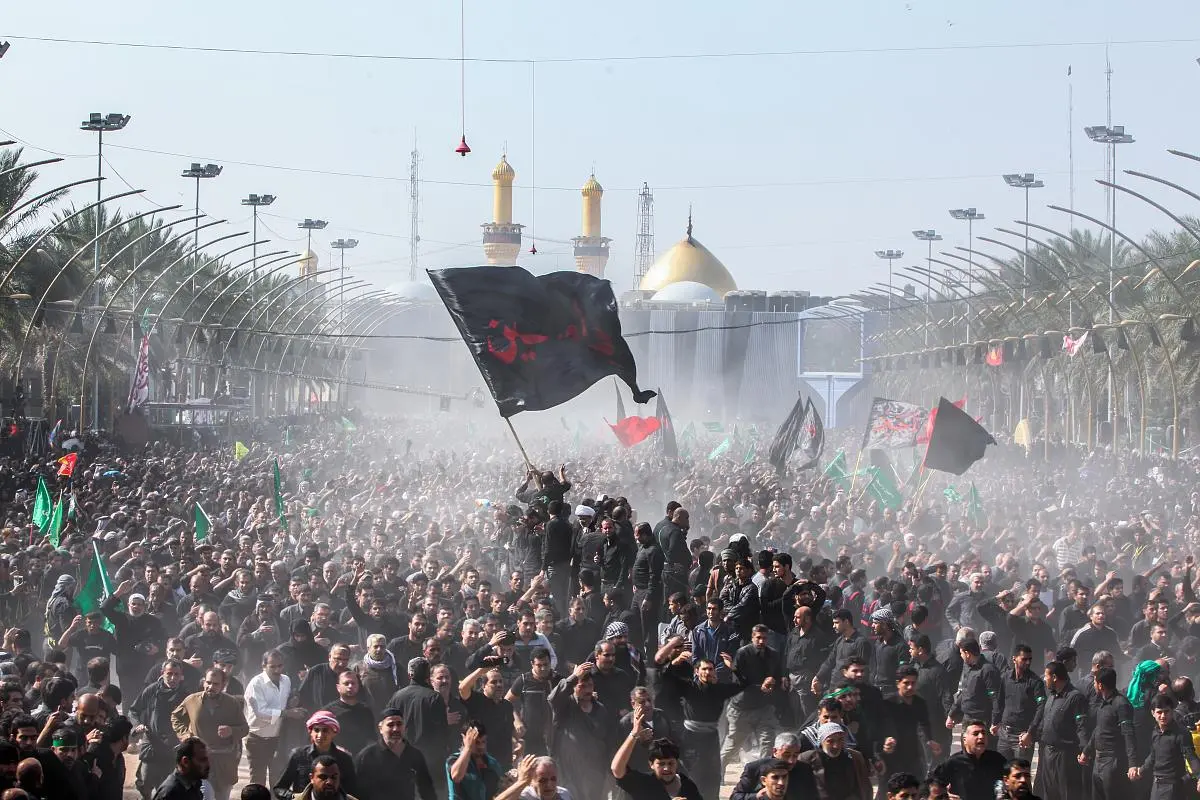
In this way, Ashura became not merely a historical event, but a living institution that has carried the values of Islam across generations.
Part Three: Our Responsibility Today- A Personal Duty or a Timeless Model?
One of the important interpretive questions surrounding Ashura is whether Imam Husayn’s uprising was a unique and exceptional obligation specific to him alone, or whether it established a responsibility that extends to future generations.
The clear position of the school of the Ahl al-Bayt (peace be upon them) is that the Imam’s action represents a universal principle and a lasting model for all believers.
The strongest evidence is the statement delivered by Imam Husayn (peace be upon him) on his journey to Karbala, in which he quoted the Messenger of Allah (peace and blessings be upon him and his family): «مَنْ رَأَى سُلْطَاناً جَائِراً مُسْتَحِلًّا لِحُرُمِ اللَّهِ… فَلَمْ یُغَیِّرْ عَلَیْهِ بِفِعْلٍ وَ لَا قَوْلٍ کَانَ حَقّاً عَلَى اللَّهِ أَنْ یُدْخِلَهُ مَدْخَلَهُ… وَ أَنَا أَحَقُّ مَنْ غَیَّرَ» “Whoever sees a tyrannical ruler who violates the sanctities of Allah… and does not oppose him through word or deed, then it is fitting that Allah place him in the same destination as that ruler… and I am the most deserving person to change this situation.”
The use of the universal term «مَنْ» (“whoever”) demonstrates that this is not a ruling confined to a particular time or place. It is an enduring principle applicable to all generations.
Likewise, the same logic appears in Imam Husayn’s response when he was asked to pledge allegiance to Yazid: «مِثْلِي لَا يُبَايِعُ مِثْلَ يَزِيد» “Someone like me cannot pledge allegiance to someone like Yazid.”
The expressions «مِثْلِي» (“someone like me”) and «مِثْلَ يَزِيد» (“someone like Yazid”) indicate that the Imam was not merely speaking about himself and Yazid as individuals. Rather, he was articulating a permanent principle: those who stand with truth must never legitimize oppression, corruption, distortion of religion, or injustice.
Just as the hadith «مَنْ رَأَى سُلْطَاناً جَائِراً…» establishes a universal responsibility, this statement also provides a timeless criterion for determining the proper stance of believers toward falsehood and tyranny.
For this reason, the culture of Ashura has long been expressed through the famous saying: «كُلُّ يَوْمٍ عَاشُورَاءُ وَ كُلُّ أَرْضٍ كَرْبَلَاءُ» “Every day is Ashura and every land is Karbala.”
This does not mean that the historical events of Karbala are repeated literally. Rather, it means that the struggle between truth and falsehood continues throughout history, requiring believers in every age to determine where they stand.
Based on this, the Holy Qur’an calls upon all believers to be upholders of justice: «كُونُوا قَوَّامِينَ بِالْقِسْطِ» “Be steadfast upholders of justice.”
It also commands the Muslim community to actively promote goodness: «وَلْتَكُنْ مِنْكُمْ أُمَّةٌ يَدْعُونَ إِلَى الْخَيْرِ»”Let there arise from among you a community that calls to goodness.”
Accordingly, the message of Ashura places several profound responsibilities upon us today.
- Safeguarding the Faith and Engaging in Intellectual Jihad (Jihād al-Tabyīn)
Every generation has a duty to understand the true teachings of Islam, preserve the message of Ashura-its spirit of dignity, justice, and refusal to submit to humiliation-and ensure that this great movement is not reduced to a hollow, isolated, or purely ritualistic form of mourning.
Ashura was never intended to be merely a historical memory. It is a living school of thought that continually inspires believers to defend truth, challenge distortion, and preserve the authentic teachings of Islam.
- Preserving the Spirit of Freedom and Social Responsibility
On the Day of Ashura, Imam Husayn (peace be upon him) addressed his opponents with one of the most powerful appeals in human history: «إِنْ لَمْ يَكُنْ لَكُمْ دِينٌ … فَكُونُوا أَحْرَارًا فِي دُنْيَاكُمْ» “If you have no religion and do not fear the Hereafter, then at least be free and noble in your worldly lives.”
This statement demonstrates that freedom, dignity, and moral courage are universal human values.
We cannot claim devotion to Imam Husayn while remaining indifferent to the condition of society, the spread of poverty and corruption, the violation of justice, or the intellectual and moral deviations that threaten our communities.
To be Husayni is not merely to mourn for Husayn; it is to embody the values for which he stood.
- Reviving Public Accountability through Enjoining Good and Forbidding Evil
Standing against deviation, corruption, and injustice at the broader social level-and striving to reform the affairs of the community-is among the most important responsibilities inherited from Karbala.
The lesson of Ashura is that believers are not passive spectators of history. They are entrusted with the responsibility of preserving truth, promoting justice, and resisting falsehood according to their abilities and circumstances.
Conclusion
Ashura is not merely an event confined to the year 61 AH; rather, it is an eternal covenant between the Ummah (community) and the Imam, and the guarantor of Islam’s continuity after the mission of the Holy Prophet (PBUH). The concept of the religion being “Husayni al-Baqaa” (sustained by Husayn) implies that truth, justice, and human dignity cannot endure without cost and responsibility. Just as Imam Husayn (AS) saved Islam from distortion and oblivion with his blood, the duty of subsequent generations today is to continue his path to the best of their ability through insight, the jihad of clarification (enlightenment), enjoining the good, reform, and standing firm against deviation. Keeping Ashura alive is precisely keeping this historical and faith-bound responsibility alive.